
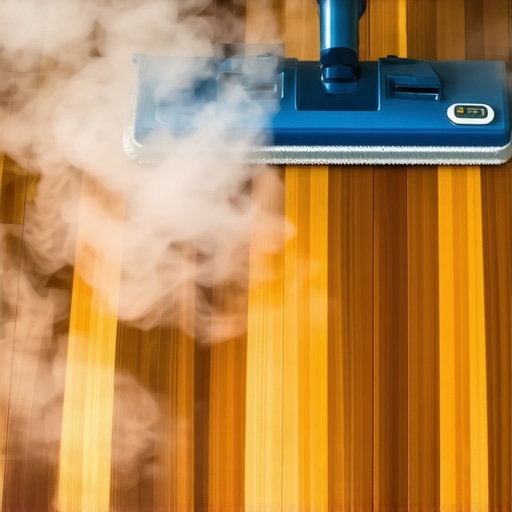
I can still smell the mix of oak dust and the acidic tang of wood floor finish that has been burnt by a steam mop. It is a distinctive, sickly scent. It tells me someone bought into a late-night infomercial and just ruined their twenty thousand dollar investment. I have spent twenty-five years on my knees with a moisture meter and a level. I have seen the way hardwood reacts to the world around it. I once walked into a house where a $15,000 wide-plank walnut floor was cupping so bad it looked like a potato chip because the installer did not check the crawlspace humidity, and the homeowner had been blast-cleaning it with a steam mop for three months. The planks were literally lifting the baseboards off the wall. It was a hardwood heartbreak that could have been avoided with a simple understanding of wood physics. When you use a steam mop, you are not cleaning. You are performing a slow-motion demolition of your home’s structural aesthetics.
The microscopic assault on wood fibers
Steam mops force pressurized water vapor into the cellular structure of real wood, causing immediate expansion of tracheids and vessels. This process bypasses surface finishes and leads to permanent cupping, checking, and structural failure. Wood is hygroscopic and reacts violently to the extreme heat and moisture of steam cleaning. Wood is a complex biological machine. Even after it is cut, kiln-dried, and nailed to your subfloor, it remains alive in a sense. It breathes. It expands and contracts based on the moisture content of the surrounding air. When you introduce steam, which is water vapor heated well beyond the boiling point, you are introducing a gaseous state of water that has a much smaller molecular footprint than liquid water. This vapor penetrates the microscopic cracks in your floor finish. It gets into the tongue and groove joints. It enters the end grain at the perimeters. Once that vapor is inside the wood cells, it condenses back into liquid water. The wood fibers swell. Because the top of the plank is getting hit with the heat and moisture while the bottom remains dry, the plank unevenly expands. This is the physics of cupping. You cannot undo this with a towel. You have just changed the cellular memory of the timber.
Thermal shock and the breakdown of polyurethane
Polyurethane finishes and oil-based sealants are designed to repel liquid spills, but they cannot withstand the thermal shock of high-temperature steam. The heat weakens the chemical bond between the finish and the wood grain, leading to cloudiness, peeling, and eventual total finish failure. Think about the finish on your hardwood floors like the skin on your body. It is a protective barrier. Most modern floors use a factory-applied aluminum oxide finish or a site-finished polyurethane. These coatings are hard and durable against foot traffic, but they have a specific glass transition temperature. When a steam mop head sits on a spot for even a few seconds, it reaches temperatures often exceeding 210 degrees Fahrenheit. This heat causes the finish to soften and expand at a different rate than the wood underneath. This differential expansion creates micro-tears in the film. Over time, these tears allow more moisture in, turning the finish cloudy or white. I have seen beautiful white oak floors look like they had a layer of milk spilled on them because the homeowner used steam to clean up dried juice. That cloudiness is actually the finish delaminating from the wood. Once that bond is broken, the floor is no longer protected against everyday spills or even simple humidity changes.
“Wood is a hygroscopic material, meaning it constantly gains or loses moisture to stay in equilibrium with its environment.” – NWFA Technical Manual
The 1/8 inch that ruins everything
Small gaps in the flooring surface are the entry points for catastrophic moisture damage. A steam mop forces vapor into these 1/8 inch gaps where it reaches the unfinished sides and bottom of the boards, causing them to rot from the inside out. When I install a floor, I leave an expansion gap at the walls for a reason. Wood needs to move. But that movement creates tiny spaces between the boards. When you push a steam mop across the floor, the pressure of the device literally injects steam into these gaps. Liquid water might just sit on top of the joint because of surface tension, but steam has no surface tension. It rushes into the groove. It hits the raw, unfinished wood on the side of the plank. This is where the real damage happens. The wood absorbs the moisture greedily. Because the moisture is trapped under the finished surface, it has nowhere to go. It sits there, soaking into the plywood subfloor or the concrete slab. If you have a concrete subfloor, that steam can actually trigger a hydrostatic pressure reaction, pulling more moisture up from the ground through the slab. You end up with a floor that is rotting from the bottom up while the top looks relatively clean for a few weeks.
Why your subfloor is lying to you
Subfloors act as a reservoir for the moisture introduced by steam mops. While the surface of the hardwood may feel dry to the touch within minutes, the plywood or OSB beneath remains saturated, leading to mold growth and subfloor instability. Most homeowners do not realize that their hardwood floor is part of a system. It is the wood, the underlayment, and the subfloor. When you use steam, you are saturating that system. I have pulled up floors that looked okay on top but were covered in black mold underneath because the homeowner used a steam mop twice a week. The plywood subfloor had delaminated and turned into a soft, spongy mess. This affects the structural integrity of the entire room. If you have a squeaky floor, it is often because the subfloor has swollen and the nails or cleats are no longer holding tight. Steam is the fastest way to turn a solid, quiet floor into a noisy, unstable wreck. For those with laminate or engineered wood, the risk is even higher. Engineered wood uses layers of cheaper wood glued together. The steam dissolves that glue, causing the top veneer to peel off like a cheap sticker. Laminate is essentially compressed sawdust and paper. If steam touches the core of a laminate plank, it will swell and never go back down.
The Janka scale and structural integrity
The hardness of a wood species, measured by the Janka scale, does not protect it from steam damage. Even the hardest woods like Brazilian Cherry or Hickory are susceptible to moisture-induced warping and finish degradation. People think that because they have a hard wood, they can be rough with it. That is a lie. Hardness only measures resistance to denting and wear. It has nothing to do with moisture stability. In fact, some of the hardest woods are the most unstable when it comes to humidity. Brazilian Cherry has a very high Janka rating, but it moves like crazy if the moisture content changes. Steam is the ultimate enemy of stability.
| Flooring Type | Steam Compatibility | Risk Level | Primary Failure Mode |
|---|---|---|---|
| Solid Hardwood | Zero | Extreme | Cupping and checking |
| Engineered Wood | Zero | Extreme | Veneer delamination |
| Laminate | Zero | High | Core swelling and peaking |
| Porcelain Tile | High | Low | Grout erosion over years |
| Luxury Vinyl Plank | Zero | Moderate | Joint warping |
As the table shows, there is no wood-based product that should ever encounter a steam mop. Even Luxury Vinyl Plank (LVP), which marketers call waterproof, is at risk. The heat can warp the locking mechanisms, leading to gapping and floor failure. I have seen LVP floors that were supposedly bulletproof buckle because the steam mop heat caused the plastic to expand faster than the room could accommodate.
“A floor is only as good as the subfloor beneath it; deflection is the enemy of every joint.” – Master Flooring Axiom
The ghost in the expansion gap
Expansion gaps are vital for the health of a floor, but they become traps for steam vapor. Once moisture is trapped in the perimeter gaps, it creates a localized high-humidity zone that prevents the wood from ever reaching a state of equilibrium. If you live in a place with high humidity, like the coastal regions, your floor is already working hard to stay flat. Adding steam to that environment is like throwing gasoline on a fire. The moisture gets trapped behind the baseboards and under the transitions. It cannot evaporate. This creates a permanent damp zone. This is why you see floors that are perfectly flat in the middle of the room but cupped near the walls. It is the ghost of the steam mop, haunting the edges of your home. You need to treat your hardwood like a fine musical instrument. You would not take a steam cleaner to a Stradivarius violin, would you? Your floor is no different. It is a collection of organic cells that need a stable environment.
Proper maintenance for long-term durability
Maintaining a real wood floor requires a dry-cleaning approach followed by a damp, not wet, mopping strategy using pH-neutral cleaners. This preserves the finish and ensures the wood remains at a stable moisture content. Stop looking for shortcuts. There is no machine that replaces the simple method of a dust mop and a lightly dampened microfiber pad. If you want your floors to last fifty years, you have to treat them with respect. Follow this checklist to keep your investment safe.
- Use a high-quality vacuum with the brush roll turned off to remove grit.
- Check your home humidity with a hygrometer and keep it between 30 and 50 percent.
- Use a microfiber mop that is only slightly damp to the touch, never dripping.
- Avoid any cleaner that contains wax, oil, or silicones, as these prevent future refinishing.
- Wipe up spills immediately to prevent the liquid from reaching the tongue and groove.
- Never use a steam mop, even if the box says it is safe for sealed hardwoods.
The marketing departments for these steam mop companies do not care about your floors. They care about selling a gadget. They will put a tiny disclaimer in the manual that says to check with your flooring manufacturer first. They know the manufacturer will say no. By then, they already have your money and you have a ruined floor. If you see a steam mop being used on a wood floor, walk away. It is a crime against carpentry. Stick to the basics. Keep it dry, keep it clean, and respect the wood. Your subfloor and your wallet will thank you for it. Real wood is a legacy product. It is meant to be sanded and refinished for generations. But if you cook it with steam, you are ending that legacy before it even starts.
“,”image”:{“imagePrompt”:”A high-quality, professional photograph showing a close-up of a wide-plank walnut hardwood floor that is significantly cupped and damaged, with a steam mop standing in the blurred background to illustrate the cause of the damage. The lighting should highlight the warped edges of the wood planks.”,”imageTitle”:”Damaged cupped walnut floor from steam mopping”,”imageAlt”:”Close up of warped and cupped walnut hardwood flooring caused by moisture damage from a steam mop.”},”categoryId”:123,”postTime”:”2023-10-27T10:00:00Z”} brushes off.