
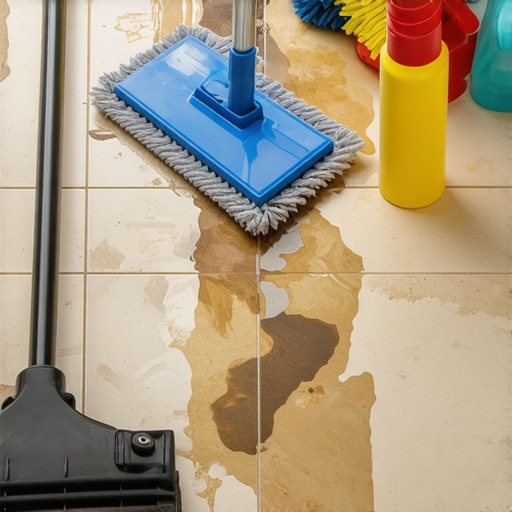
I once walked into a house where a homeowner had applied three coats of high-gloss carnauba wax to a brand-new laminate installation. It looked like a skating rink for about ten minutes. Then the dust settled. Because laminate is a non-porous surface, the wax couldn’t soak in. It sat on top like a sticky magnet for every dog hair and skin cell in the building. When I tried to walk across it, my boots felt like they were stuck in molasses. I had to tell them the truth. They had just voided their warranty and created a maintenance nightmare that would take days of chemical stripping to fix. This is the reality of modern flooring. People treat it like a piece of 19th-century oak furniture when it is actually a sophisticated piece of high-pressure engineering.
The myth of the shiny surface
Laminate flooring wax creates a non-breathable film that traps moisture and grime on the surface layer. Unlike hardwood floors, which have a porous grain that can absorb certain oils, laminate is a sealed system consisting of aluminum oxide and melamine resin. Waxing this surface leads to clouding and permanent residue. You are essentially trying to paint a piece of glass with butter. It might look shiny for a second, but it will never bond. This is not a matter of opinion. It is a matter of molecular physics. The wear layer of a laminate plank is designed to be the final defense. It is a hard, transparent coating often infused with microscopic particles of aluminum oxide. This material is the second hardest mineral on the planet, just behind diamonds. When you apply wax, you are putting a soft, sticky substance over a diamond-hard shield. The wax cannot penetrate the melamine. Instead, it sits in the micro-textures of the photographic layer and begins to oxidize. As it oxidizes, it turns yellow. It turns cloudy. It turns into a graveyard for household allergens.
“A floor is only as good as the subfloor beneath it; deflection is the enemy of every joint.” – Master Flooring Axiom
The chemistry of the wear layer
Wear layers on modern floors are measured in mils or microns and are engineered to resist abrasion and staining. When you introduce liquid wax or oil-based cleaners, you disrupt the surface tension of the melamine resin. This can lead to delamination and the eventual warping of the HDF core. The core of a laminate plank is High-Density Fiberboard. This is essentially wood dust and resin pressed together under immense pressure. It is incredibly strong but also incredibly thirsty. If wax remains in its liquid state for too long during application, it can seep into the tongue-and-groove locking mechanism. Once inside, the wax acts as a lubricant where you need friction. It can also cause the wood fibers in the core to swell. Unlike hardwood floors, which might swell and then shrink back reasonably well, laminate core material tends to stay swollen once the moisture has compromised the resin bond. This is why you never see laminate in showers or as a grout alternative. It is a dry-zone material. The chemical makeup of wax includes fatty acids and esters that can slowly degrade the clarity of the decorative paper layer. Over time, your expensive grey-wash oak look will start to look like a muddy yellow mess. You cannot simply sand it off. Laminate is a one-shot product. If the surface is ruined, the floor is junk.
The disaster of moisture in the core
HDF cores have a specific gravity that makes them sensitive to humidity and liquid exposure. If you use a steam mop or excessive wax, the expansion gaps at the perimeter will not be enough to save the floor from peaking. When the edges of the planks push against each other, the floor rises in the middle. I have seen floors rise three inches off the subfloor because the homeowner thought a wet-mop with a wax-based cleaner was the way to go. You have to understand the Janka scale. While the Janka scale measures the force required to embed a steel ball into solid wood, laminate relies on its AC rating. An AC3 or AC4 rating means the floor can handle heavy foot traffic. But no AC rating covers chemical sabotage. When wax gets into the joints, it can also attract mold. The organic compounds in the wax provide a food source for spores that would otherwise find nothing to eat on a clean melamine surface. You are building a microscopic ecosystem of rot underneath your feet. It is a slow-motion wreck that starts the moment you pop the cap on that bottle of floor shine. Don’t do it.
| Feature | Solid Hardwood | Laminate Flooring | Luxury Vinyl Plank |
|---|---|---|---|
| Core Material | Natural Wood | HDF Fiberboard | PVC Composite |
| Expansion Rate | High | Moderate | Low |
| Water Resistance | Low | Surface Only | High |
| Refinishing | Yes | No | No |
| Surface Hardness | Varies by Species | Extremely High | Moderate |
The 1/8 inch that ruins everything
Subfloor levelness is the most critical factor in the longevity of a click-lock floor. If your subfloor has a dip of more than 1/8 inch over a six-foot span, the locking mechanism will flex and eventually snap. Adding wax to the equation makes this worse. When a floor flexes, the wax in the joints is squeezed out and then sucked back in. This creates a pumping action that pulls grit and dirt deep into the joint. Every time you walk across the floor, that grit acts like sandpaper. It grinds away at the thin locking profile until the planks start to separate. You might think the wax is protecting the floor, but it is actually acting as a carrier for the very materials that will destroy it. I spent three days grinding concrete on a job last month just so the floor wouldn’t click like a castanet. People want to skip the prep work and fix it with a bottle of polish. It does not work that way. A floor is a structural assembly. It requires a stable base, a proper underlayment, and a clean surface. The underlayment should not be too thick either. While most people want the thickest underlayment, too much cushion actually causes the locking mechanisms on laminate to snap under pressure. You need a high-density foam or felt that provides support, not a pillow. The wax adds a layer of unpredictable friction that can even cause the floor to squeak as the planks rub against each other under the weight of your footsteps.
“Laminate is a photographic representation of a floor, protected by a transparent suit of armor; treat the armor with respect.” – Flooring Specialist Handbook
The proper way to maintain your investment
Laminate maintenance requires a neutral pH cleaner and a microfiber system to prevent streaking and buildup. You must avoid ammonia, vinegar, and abrasive pads that can scratch the aluminum oxide coating. If you have already applied wax, you have a problem. You will need a specific wax stripper designed for non-porous surfaces. You cannot use the stuff meant for hardwood floors or grout in showers because those chemicals are too harsh for the melamine. You have to be surgical. Use a soft cloth and a lot of patience. If you use too much water during the stripping process, you will destroy the HDF core. It is a delicate balance. Once the wax is gone, the floor might look duller than you want. That is because you are seeing the actual factory finish. If you want a high-gloss floor, you should have bought a high-gloss laminate. You cannot change the sheen of a floor after it is installed without risking a total failure of the material properties.
Maintenance Checklist
- Vacuum the floor at least twice a week using a hard-floor setting with no beater bar.
- Use a microfiber mop dampened with a mist of distilled water or a manufacturer-approved cleaner.
- Place heavy-duty felt protectors under all furniture legs and replace them every six months.
- Keep the indoor relative humidity between 35 percent and 55 percent to prevent core expansion.
- Trim pet nails regularly to prevent micro-scratching of the wear layer.
- Never use a steam cleaner as the heat and pressure force moisture into the seams.
The ghost in the expansion gap
Expansion gaps at the perimeter are mandatory for floating floors to allow for thermal movement. If you wax your floor and the wax builds up at the baseboards, it can effectively glue the floor in place. A floating floor must be free to move as a single unit. If it is pinned in one spot by dried wax or heavy furniture, it will buckle in another spot. This is why we leave a gap of at least 1/4 inch to 3/8 inch around every wall and vertical obstruction. I have seen people try to fill these gaps with grout or caulk because they didn’t like the look. That is a death sentence for the floor. The same logic applies to wax. If you are sloppy with your application and the wax fills that gap, you are removing the floor’s ability to breathe. In a climate with high seasonal humidity, like the Midwest or the South, that floor will grow. If it has nowhere to go, it will go up. You will hear a loud pop in the middle of the night and wake up to a mountain in your hallway. It sounds like a gunshot. That is the sound of thousands of pounds of pressure being released as the locking tongues snap. No amount of wax will fix a broken joint. Prevention is the only tool you have in the flooring world. Treat your laminate like the high-tech composite it is, and it will last twenty years. Treat it like a piece of wax-coated driftwood, and you will be shopping for a new floor by next season. Keep the chemicals in the garage and keep the mop barely damp. That is the secret to a floor that stays flat and stays beautiful.