
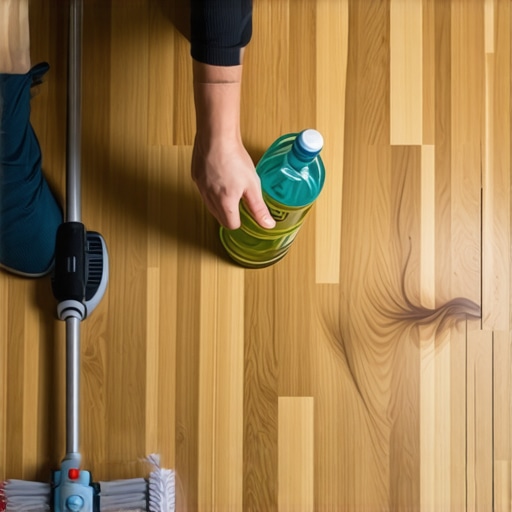
Homeowners always ask why their floors are buckling. Usually, it is because they treated their floor like a science experiment gone wrong. I once walked into a house where a beautiful high-end laminate installation looked like a series of mountain ranges. The planks were peaking at every joint. The homeowner was proud of her natural cleaning routine using white vinegar and water. She did not realize she was effectively melting the adhesive resins that kept her floor stable. She spent four thousand dollars on materials just to have them ruined by a five-cent solution. Laminate is an engineered system, and when you introduce acetic acid to a resin-based product, you are asking for a structural disaster.
The chemical reality of acetic acid
Vinegar contains acetic acid which acts as a solvent on the melamine resin of laminate floors. This acidic nature breaks down the protective wear layer and penetrates the HDF core. Using vinegar causes permanent swelling and delamination of the decorative paper layer, leading to irreversible structural failure of the flooring system. Laminate flooring is a multi-layered product. It starts with a wear layer made of aluminum oxide or melamine resin. Below that is the decorative layer, then the High-Density Fiberboard (HDF) core, and finally a balancing layer. When you apply vinegar, you are applying a liquid with a pH of around 2.5. This is highly acidic. Over time, this acid eats through the aluminum oxide finish. Once that finish is compromised, the moisture travels directly into the click-lock joints. These joints are the most vulnerable part of the floor. They are not protected by the same wear layer as the surface. Once the acetic acid reaches the HDF, it breaks down the internal bond of the wood fibers. This is not just a cleaning issue. This is a molecular breakdown of the floor’s integrity.
Why your joints are swelling
Laminate joints swell because the HDF core absorbs liquid through capillary action. When acidic vinegar solutions sit on these seams, they bypass the surface protection and saturate the raw wood fibers. This causes the edges of the planks to expand upward, a phenomenon known as peaking, which cannot be reversed. Most people think laminate is plastic. It is not. It is mostly wood. Specifically, it is wood dust pressed together with resin. Imagine a sponge that has been compressed under thousands of pounds of pressure. That is your subfloor and your laminate core. When you introduce water, the sponge wants to expand. When you add vinegar to that water, you are speeding up the process. The acid makes the resin more porous. Once the edges peak, they become proud of the rest of the floor. This means every time you walk across the room, your feet are catching on those edges. This leads to premature wear and eventually the decorative layer will simply flake off, exposing the brown core underneath. It is a slow death for a floor that should last twenty years.
The myth of the natural cleaner
Natural cleaners like vinegar are often too aggressive for modern flooring finishes and protective coatings. While vinegar is excellent for removing mineral deposits in showers or cleaning grout, it lacks the pH-neutral properties required to maintain the warranty of laminate and hardwood floors. Using it can void your manufacturer warranty immediately. There is a common misconception that if you can eat it, you can clean with it. This is dangerous logic in the world of flooring. Vinegar is a great descaler. It is fantastic for cleaning the glass in your showers or scrubbing the grout between your ceramic tiles. But those materials are inorganic. Laminate and hardwood floors are organic-based products. They react to their environment. I have seen warranties denied because the inspector found evidence of acidic etching on the surface. Most manufacturers specifically state that you must use a pH-neutral cleaner. A neutral cleaner has a pH of 7. It cleans the dirt without reacting with the finish. Vinegar is a 2.5 on the scale. That is a massive difference in the world of chemistry. Every time you mop with it, you are performing a microscopic chemical peel on your floor.
“A floor is only as good as the subfloor beneath it; deflection is the enemy of every joint.” – Master Flooring Axiom
Microscopic damage to the wear layer
The wear layer of a laminate floor is a thin shield of aluminum oxide designed to resist abrasion and impact. Acetic acid gradually etches this shield, creating micro-fissures that trap dirt and oils. This results in a dull, hazy appearance that no amount of additional cleaning can fix without professional restoration. When you first install a floor, it has a specific sheen. Whether it is matte or high-gloss, that sheen is a result of the light reflecting off a smooth surface. When you use an acidic cleaner, you are creating pits in that surface. You cannot see them with the naked eye, but you can see the result. The floor starts to look cloudy. Homeowners often respond to this cloudiness by mopping more, often with even more vinegar, thinking they have a dirt buildup. In reality, they are just digging the hole deeper. They are stripping the finish. This is why you see those footprints that never seem to go away. The oils from your feet are getting trapped in the micro-fissures created by the vinegar. At this point, the only solution is usually replacement, as laminate cannot be sanded and refinished like solid hardwood floors.
The 1/8 inch that ruins everything
Expansion gaps are the most critical component of a floating floor installation to prevent buckling and peaking. An expansion gap of at least 1/4 inch must be maintained around the entire perimeter to allow the HDF core to expand and contract with seasonal changes in humidity and temperature. Many installers get lazy. They run the laminate tight against the baseboards or the door frames. They think it looks better. But wood moves. In the summer, when the humidity hits 60 percent, those planks are going to grow. If they have nowhere to go, they will push against each other. This is called crowning. If you have been mopping with vinegar, those joints are already weakened. The pressure from the lack of an expansion gap will cause the locking mechanisms to literally snap. I have seen floors where the boards have popped up three inches off the subfloor because they were pinned against a kitchen island. You must treat a floating floor like a living thing. It needs room to breathe. If you lock it down with heavy cabinetry or tight transitions, it will fail.
| Feature | White Vinegar | pH-Neutral Cleaner | Steam Mops |
|---|---|---|---|
| pH Level | 2.5 (Acidic) | 7.0 (Neutral) | N/A (Neutral) |
| Core Impact | High Swelling Risk | None | Extreme Risk |
| Residue | Low | None | None |
| Joint Safety | Dangerous | Safe | Critical Failure |
What the industry standards actually say
Professional organizations like the NWFA and NALFA explicitly forbid the use of acidic cleaners on resin-based or oil-finished flooring. These standards emphasize the use of microfiber mops and specialized cleaners to maintain the structural integrity of the click-lock system and the surface tension of the wear layer. According to the North American Laminate Flooring Association (NALFA), the best way to clean is to use a vacuum with the beater bar turned off. Follow this with a slightly damp microfiber mop. When I say damp, I mean it should be dry to the touch within thirty seconds. If your floor is staying wet for minutes, you are using too much water. The moisture will find its way into the subfloor. If you are on a concrete slab, that moisture can get trapped under the underlayment and grow mold. This is why a 6-mil poly film is required as a moisture barrier. It is not just about the top of the floor. It is about the entire assembly from the concrete up to the wear layer.
- Never use wax or polish on laminate floors.
- Avoid steam mops as the high-pressure heat forces moisture into the HDF core.
- Use felt protectors on all furniture legs to prevent scratching the wear layer.
- Wipe up spills immediately to prevent capillary action at the joints.
- Maintain indoor humidity between 30 and 50 percent to minimize floor movement.
The invisible threat of subfloor moisture
Subfloor moisture levels must be verified with a moisture meter before any flooring installation begins. Concrete slabs must emit less than 3 pounds of moisture per 1000 square feet over 24 hours to ensure the laminate core does not succumb to hydrostatic pressure from below. You can clean with the right products and still have a failure if your subfloor is wet. A lot of guys skip the leveling compound and the moisture test. They think the underlayment will hide the dips and protect against the dampness. It will not. If the subfloor is uneven, the planks will flex every time you step on them. This flexing puts stress on the tongues and grooves. If you have been weakening those joints with vinegar, they will break much faster. A floor is a system. It requires a flat, dry subfloor, a quality underlayment, and a maintenance routine that respects the chemistry of the materials. Stop using vinegar. Use a dedicated laminate cleaner and keep your water usage to a minimum. Your floor, and your wallet, will thank you.