
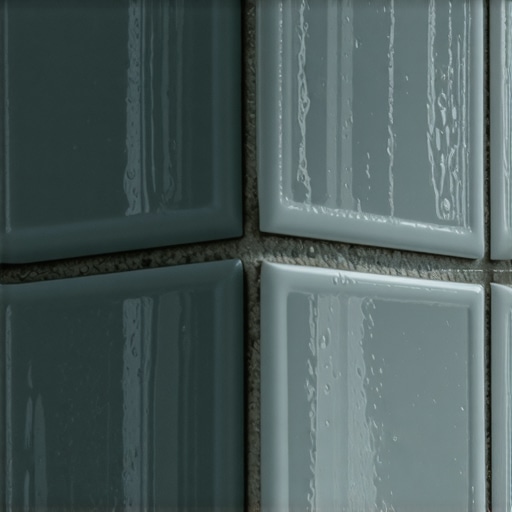
I spent three days grinding concrete on a job last month just so the floor wouldn’t click like a castanet. Most guys skip the leveling compound. They think the underlayment will hide the dip. It won’t. I’ve seen it a thousand times. You walk into a master bath and see those hairline fractures spiderwebbing through the shower corners. The homeowner is upset. They think the grout is cheap. It isn’t the grout. It is the structure. A floor is a machine. If the machine has a loose bolt, the whole thing rattles until it breaks. I smell like oak dust and old adhesive most days, and I can tell you that a crack is just the house telling you that something moved when it should have stayed still. This is especially true in showers where moisture and heat are constantly stressing the bonds of your tile work. Grout is essentially a brittle rock. When you put a brittle rock in a corner where two walls are trying to move in opposite directions, the rock loses every single time.
The physics of the change of plane
The change of plane occurs where two different surfaces meet, such as the intersection of a shower wall and the shower floor or where two walls meet. These areas are subject to differential movement, meaning one surface expands or contracts at a different rate than the one next to it. Houses are dynamic organisms. They breathe. The wood studs behind your tile absorb moisture from the humid bathroom air and swell. When they dry out, they shrink. If you have filled that 90-degree corner with rigid Portland cement grout, it has zero ability to compress or stretch. It simply snaps. This is why the industry standards are so specific about movement joints. You are not just building a pretty wall. You are engineering a surface that must survive constant thermal and hygroscopic cycles.
“A floor is only as good as the subfloor beneath it; deflection is the enemy of every joint.” – Master Flooring Axiom
Why your subfloor is lying to you
Subfloor deflection is the amount of vertical flex a floor system experiences under a load, and it is the primary killer of shower grout. If your joists are spaced too far apart or if the plywood is too thin, the floor will bounce when you step on it. For ceramic tile, the standard is L/360, which means the floor should not bend more than the length of the span divided by 360. If you are using natural stone, that requirement doubles to L/720. When the floor flexes, the wall remains stationary. This shear force is concentrated directly in the corners. If you haven’t reinforced the subfloor with a proper cement backer board or a high-quality uncoupling membrane, the grout in the corners will crack within months of installation. I have spent years fixing jobs where the previous guy thought a bit of extra thin-set would act as a structural fix. It never does.
The myth of the waterproof grout joint
Standard cementitious grout is naturally porous and is not designed to be a primary waterproof barrier for your shower system. Many people believe that as long as the grout is intact, the shower is sealed. This is a dangerous misunderstanding of capillary action. Water can and will migrate through grout lines. This is why the underlying waterproofing membrane, such as a liquid-applied guard or a bonded sheet membrane, is the most important layer of the assembly. When grout cracks in the corners, it allows even more water to reach the substrate. If that substrate is standard drywall or non-moisture-resistant wood, you are looking at rot and mold. The cracking is just the visible symptom of a structural movement issue that is now inviting water to do its worst. You need to treat the corner not as a gap to be filled, but as a technical joint to be engineered.
Hardwood and laminate lessons for the wet room
Laminate and hardwood floors require expansion gaps at every perimeter to allow for the natural movement of the material, and showers require the same logic. When I install a solid white oak floor, I leave a 3/4 inch gap at the wall. We hide it with baseboards. In a shower, you don’t have baseboards to hide your mistakes. You have to use technical products. Laminate floors are floating systems that move as a single unit. If you pin a laminate floor down with a heavy kitchen island, it buckles. Similarly, if you pin your shower walls together with rigid grout, they buckle at the weakest point, which is the corner joint. We can learn from the physics of wood flooring. Movement is inevitable. You must design for it rather than trying to fight it with more cement. The bond strength of a high-polymer thin-set is impressive, but it cannot overcome the laws of thermal expansion.
Chemical reality of modified thin set
Modern thin-set mortars are engineered with polymers that increase their bond strength and slightly improve their flexibility compared to old school mud beds. ANSI A118.4 and A118.15 standards define these high-performance mortars. However, even the best thin-set cannot compensate for a lack of movement joints in the corners. The chemistry of Portland cement involves the formation of calcium silicate hydrate crystals. These crystals are incredibly strong in compression but very weak in tension. When the walls pull away from each other due to seasonal shifts, those crystals snap. This is why we use 100 percent silicone caulk in the corners. Silicone is an elastomer. It can stretch to double its size and return to its original shape. It handles the tension that cement cannot.
| Material Type | Movement Capability | Primary Use Case | Durability Rating |
|---|---|---|---|
| Sanded Grout | Less than 1% | Flat surface joints | High (Rigid) |
| Unsanded Grout | Less than 1% | Thin wall joints | Medium (Rigid) |
| Silicone Sealant | 25% to 50% | Corners and Changes of Plane | High (Flexible) |
| Acrylic Caulk | 5-10% | Baseboards and Trim | Low (Shrinks) |
The ghost in the expansion gap
The ghost in the expansion gap refers to the invisible forces of structural settling and thermal movement that haunt every rigid installation. I remember a job where the client insisted on grouting the corners because they hated the look of silicone. I told them it would fail. Six months later, the call came in. The grout had crumbled into dust. The house was a new build, and as the lumber dried out, the framing moved nearly an eighth of an inch. That might not sound like much, but in the world of tile, an eighth of an inch is a canyon. If you don’t respect the expansion gap, the house will create its own gap. It will be ugly, jagged, and it will leak. Proper installation means leaving that corner joint open and filling it with a color-matched professional grade sealant that meets ASTM C920 standards.
A checklist for a crack free shower
- Verify that the subfloor meets L/360 deflection standards before any tile is laid.
- Ensure that the wall framing is plumb and securely blocked at the corners to minimize independent stud movement.
- Apply a high-quality waterproofing membrane that extends fully into the corners and up the walls.
- Leave a consistent 1/8 inch to 1/4 inch gap at every change of plane, including wall-to-wall and wall-to-floor intersections.
- Use a vacuum to remove all thin-set debris from the corner gaps before sealing.
- Apply a bond breaker tape in the corner if you need maximum movement capability from your sealant.
- Select a 100 percent silicone sealant that is color-matched to your grout for a professional look.
- Tool the silicone with a soapy finger or a specialized tool to ensure a deep, compressed bond.
- Check the moisture content of the wood framing with a meter; it should be below 12 percent before closing the walls.
- Never bridge a movement joint with tile; the joint in the substrate must telegraph through to the surface.
The 1/8 inch that ruins everything
A tiny 1/8 inch gap left empty or filled with the wrong material can lead to the total failure of a multi-thousand dollar shower installation. Most installers get lazy. They grout the whole thing because it is faster than coming back the next day to caulk. But speed is the enemy of quality in the flooring world. When you fill that corner with grout, you are creating a ticking time bomb. The moisture from the shower will eventually find the hairline cracks. It will seep behind the tile. It will swell the thin-set. It will eventually pop tiles off the wall. I have seen entire walk-in showers ruined because someone didn’t want to spend twenty minutes with a caulk gun. If you want a floor that lasts twenty-five years, you build it to move. You don’t build it to be a tomb.
“Movement joints are not optional; they are the insurance policy for your craftsmanship.” – TCNA Handbook Principle