
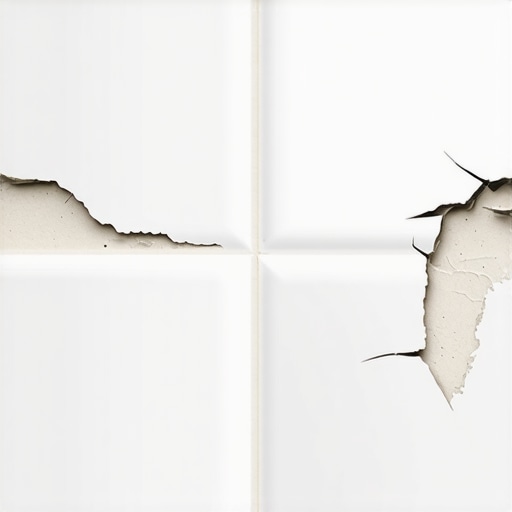
Listen close because I am only going to say this once. I have spent thirty years on my knees with a trowel and a moisture meter, and I have seen more floors ruined by a ten dollar bottle of hardware store sealer than by actual floods. You see that white, flaky skin peeling off your shower floor? That is not a mystery. It is a failure of chemistry and a fundamental misunderstanding of how porous materials breathe. Most guys skip the leveling compound. They think the underlayment will hide the dip. It won’t. I spent three days grinding concrete on a job last month just so the floor would not click like a castanet, and grout sealing requires that same level of structural respect. If you treat your grout like a piece of wood you are painting, you are going to fail every single time. Hardwood floors and showers have one thing in common. They both live and die by moisture management. When you slap a cheap topical sealer over a grout joint that is still holding water, you are essentially shrink-wrapping a swamp. The bond will fail, the plastic will flake, and you will be left with a mess that looks like a peeling sunburn.
The physics of why sealant flakes away
Grout sealant peels because of poor surface preparation, excessive moisture vapor transmission, or the application of a topical acrylic coating instead of a penetrating silane-siloxane sealer. When moisture is trapped beneath a non-breathable layer, hydrostatic pressure forces the film to detach from the cementitious substrate. This process, often called delamination, occurs at the molecular level where the polymer chains of the sealer fail to hook into the pores of the grout. If you did not wait the full seventy-two hours for your grout to cure, you have doomed the installation. Cement needs time to hydrate. If you interrupt that hydration with a plastic skin, the moisture has nowhere to go but up, and it will take your sealer with it. It is the same reason you do not put a heavy kitchen island over floating laminate or waterproof LVP without expansion gaps. You are suffocating the system.
“A floor is only as good as the subfloor beneath it; deflection is the enemy of every joint.” – Master Flooring Axiom
The plastic film fallacy
Topical sealers create a temporary barrier on the surface of the grout while penetrating sealers enter the pores to change the surface tension from within. Most homeowners buy the shiny stuff because it looks clean for a week. That is a mistake. A topical sealer is just a thin coat of plastic. In a high-moisture environment like a shower, that plastic cannot handle the constant expansion and contraction of the tile assembly. Cementitious grout is fundamentally a sponge. It wants to move moisture. If you block that movement with a cheap acrylic, the alkaline salts in the cement will rise to the surface, a process called efflorescence, and eat the bond from the inside out. You end up with a white, crusty mess that peels off like dried Elmer’s glue. I have seen guys try to save a buck by using the same sealer for their driveway on their kitchen floor. It never works. You need a product that is vapor permeable.
| Sealer Type | Bond Mechanism | Vapor Permeability | Durability |
|---|---|---|---|
| Topical Acrylic | Mechanical Film | Low to Zero | 6 to 12 Months |
| Penetrating Silane | Molecular Alteration | High | 3 to 5 Years |
| Fluoropolymer | Chemical Shield | Excellent | 5 to 10 Years |
How to strip the ghost of bad decisions
Stripping failed grout sealer requires an alkaline-based chemical stripper, a stiff nylon brush, and a wet-vacuum to remove the emulsified plastic before it re-sets into the pores. You cannot just scrub this away with soap and water. You are dealing with cross-linked polymers. You need a chemical that is going to break those bonds without eating the grout itself. Do not use acid. Acid will dissolve the lime in your grout and turn your shower floor into a sandy mess. You want a high-pH stripper designed for stone and tile. Apply it in small sections. If it dries before you scrub it, you have just doubled your workload. You need to keep the surface wet and agitated. It is back-breaking work, but there is no shortcut to a clean substrate. If you do not get every microscopic bit of that old plastic off, the new sealer will not stick either.
- Test a small inconspicuous area with the stripper to check for tile discoloration.
- Apply the alkaline stripper and let it dwell for exactly twenty minutes.
- Scrub the grout lines with a stiff-bristled brush until the film begins to lift.
- Use a wet-vac to suck up the slurry. Do not just mop it.
- Rinse the area three times with clean, distilled water to neutralize the pH.
- Check for any remaining “ghost” spots using a spray bottle of water. If the water beads, the sealer is still there.
The 1/8 inch that ruins everything
The precision of grout joints and the levelness of the subfloor determine the longevity of the sealer bond. If your subfloor has a dip, the tile will deflect. When tile deflects, the grout cracks. When grout cracks, the sealer bond is broken mechanically. Most guys think the underlayment will hide the dip. It won’t. I have seen people try to use thick underlayment to compensate for a bad slab. That is the worst thing you can do. Too much cushion actually causes the locking mechanisms on LVP to snap under pressure, and it causes grout in tile to crumble. You need a dead-flat surface. If your floor is moving even a fraction of an inch, your sealant is going to flake off because it cannot span a moving gap. This is why the TCNA is so strict about deflection ratings. If you are installing over wood joists, you better make sure you have the right subfloor thickness to prevent that bounce.
“The presence of moisture in the substrate will prevent the proper adhesion of any topical coating.” – TCNA Guide to Tiling
Why your subfloor is lying to you
Concrete slabs may look dry on the surface while holding a reservoir of moisture that will eventually push any topical coating off the floor. You need to know the calcium chloride test results before you even think about sealing. In regions with high humidity or high water tables, the vapor drive coming through the slab is immense. If you are in a place like Houston or Florida, you are basically building on a sponge. You need a sealer that allows that vapor to pass through without taking the finish with it. This is why site-finished hardwood is such a gamble in those climates. The wood expands, the finish cracks, and the moisture wins. Grout is the same. It is a breathing organism. If you treat it like a static, dead material, it will prove you wrong by shedding its skin. Use a penetrating sealer. It does not change the look, but it changes the chemistry of the pore. That is how you win.