
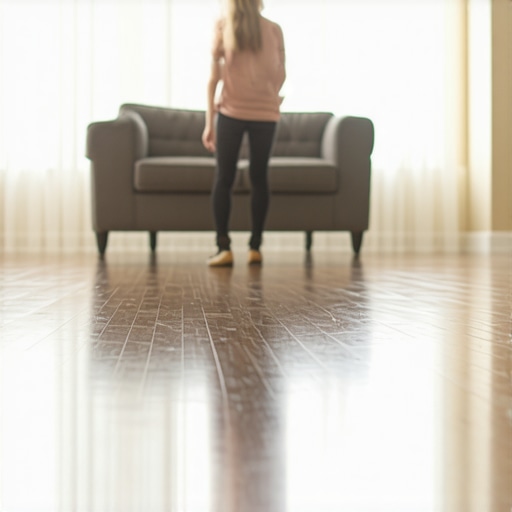
I once walked into a house where a $15,000 wide-plank walnut floor was cupping so bad it looked like a potato chip because the installer didn’t check the crawlspace humidity. It was a tragedy of engineering. The owner was devastated. They had spent a fortune on the material but neglected the physics of the subfloor and the chemistry of the finish. This is the reality of hardwood floors. They are living, breathing organisms that respond to the environment with more sensitivity than a high-end thermometer. When your refinisher tells you to stay off the floor for 48 hours, they are not being dramatic. They are protecting the integrity of the chemical bond that serves as the only barrier between your investment and total destruction. We live in an era of instant gratification where people want to click a floor together like a Lego set and walk on it five minutes later. Real craft does not work that way. A site-finished floor requires patience because the polymerization of the polyurethane is a structural transformation that cannot be rushed by a calendar or a deadline.
The molecular wait for finish stabilization
The 48 hour waiting period is required because the finish must undergo a chemical process called cross-linking to reach its initial structural hardness. While the surface may feel dry to the touch within hours, the underlying molecules are still forming bonds that resist indentation and scratching from heavy furniture weight. Modern flooring finishes are often a blend of resins and solvents. When we apply a waterborne or oil-modified poly, the first thing that happens is the evaporation of the carrier. This is what most homeowners think of as drying. However, the real work happens after the solvent is gone. Oxygen interacts with the resins to create a three-dimensional web of polymers. If you place a heavy sofa or a dining table on the floor before this web is strong enough, you are not just scratching the surface. You are actually displacing the finish at a molecular level, creating a permanent depression in the wear layer that will trap dirt and moisture for years to come. I have seen beautiful white oak floors ruined because someone was in a hurry to move their dresser back. The legs of the dresser sank into the soft finish, leaving four circular scars that no amount of buffing could fix. You have to respect the chemistry of the cure.
“A floor is only as good as the subfloor beneath it; deflection is the enemy of every joint.” – Master Flooring Axiom
[IMAGE_PLACEHOLDER_1]
The ghost in the expansion gap
Hardwood floors require an expansion gap around the perimeter of the room to allow for the natural movement caused by seasonal humidity changes. This gap is often hidden by baseboards or shoe molding but it remains the most vital structural component of a successful hardwood installation or refinishing project. If you move your furniture back too early, you risk pinning the planks down before they have had a chance to stabilize in their new environment. Refinishing involves removing the old top layer and exposing fresh wood cells. These cells are thirsty. They will absorb or release moisture until they reach equilibrium with your home. If you lock a heavy object over a specific set of planks while they are still adjusting, you create a point of tension. In the winter, when the air dries out, those planks will try to shrink. If the furniture is too heavy, the wood might split or the finish might crack at the seams. This is why we insist on a clear room. We need the floor to breathe as a single unit without the interference of localized weight loads. It is the same reason we warn about laminate and its click-lock mechanisms. Excessive weight on a floating system before it has settled can lead to joint failure and peaked edges that will never lay flat again.
Why your subfloor is lying to you
Subfloors often hide structural defects like dips and moisture pockets that can ruin a finish if they are not addressed before the sanding begins. A refinisher waits 48 hours to ensure that any latent moisture from the sanding and coating process has fully equalized across the entire assembly. I spent three days grinding concrete on a job last month just so the floor wouldn’t click like a castanet. People think the wood is the only thing that matters, but the subfloor is the foundation. If you have a concrete slab with a high moisture vapor emission rate, that moisture is constantly pushing upward. When we seal the top with three coats of poly, we are essentially putting a lid on a pot. If the finish is still soft and you put a non-breathable rug or a heavy piece of furniture down, you are trapping that moisture directly under the finish. This leads to cloudy spots, peeling, or even rot. It is especially problematic near areas with water, such as showers or kitchens where the grout might be failing. If your bathroom grout is cracked, moisture can migrate through the wall and under your hardwood in the hallway. Waiting those extra hours allows the system to reach a state of stasis.
The 1/8 inch that ruins everything
Precision in flooring is measured in fractions of an inch, where a deviation of 1/8 inch over 10 feet can cause finish failure or structural instability. The curing process ensures that the finish maintains its thickness and protection level across these minute variations in the wood surface. When we sand a floor, we are creating a perfectly flat plane. But wood is not a static material. It has grain, density variations, and different absorption rates based on whether it is red oak, maple, or walnut. A waterborne finish might raise the grain slightly, requiring a buff between coats. If you interrupt this process by moving furniture, you are disrupting the uniform thickness of the protective layer. We measure the wear layer in mils, which are thousandths of an inch. A typical residential floor has a wear layer of about 3 to 5 mils after refinishing. That is thinner than a human hair. If you slide a chair across a floor that is only 90 percent cured, you can strip away 2 mils of protection in a single second. That is why we are so obsessive about the 48-hour rule. We are guarding a microscopic shield.
| Finish Type | Walking Time | Furniture Ready | Full Cure Time |
|---|---|---|---|
| Waterborne Polyurethane | 4 to 6 Hours | 48 Hours | 14 Days |
| Oil-Modified Polyurethane | 24 Hours | 72 Hours | 30 Days |
| Hardwax Oil | 12 Hours | 48 Hours | 7 Days |
| Moisture Cure Urethane | 12 Hours | 48 Hours | 14 Days |
Protecting the investment during the critical window
During the first 48 hours, the floor is most vulnerable to mechanical damage and chemical contamination from household activities. Avoiding shoes, pets, and cleaning agents during this time is the only way to ensure the finish develops its intended luster and durability. Many homeowners assume that once the smell is gone, the floor is ready. This is a dangerous misconception. The odor comes from VOCs or solvents leaving the material. The hardness comes from the molecular structure tightening. If you walk on the floor with high heels, you can exert over 2,000 pounds of pressure per square inch. This will pulverize the wood fibers beneath the soft finish. Even socks can be a problem if they have plastic grippers on the bottom. We recommend walking in clean cotton socks only if you must enter the room. Pets are a major hazard. Their claws are like tiny chisels, and if they have an accident, the urea can react with the uncured finish to create a permanent yellow stain that goes deep into the grain. Treat your floor like a fresh painting in a gallery for the first two days. It is a work of art that is currently in a state of chemical transition.
“Wood is hygroscopic, meaning it constantly gains or loses moisture to stay in environment equilibrium.” – NWFA Technical Manual
Strategic steps for a successful furniture return
Following a strict protocol for reintroducing furniture will extend the life of your hardwood floors by several decades. This involves checking the humidity, using the correct pads, and ensuring that no heavy items are dragged across the newly hardened surface. When the 48 hours are up, do not just start dragging things back. Lift everything. If a piece of furniture is too heavy to lift, use professional-grade sliders, but only after checking that no grit or sawdust is trapped under the slider. Even a single grain of sand can act like a diamond-tipped saw under the weight of a cabinet. I always tell my clients to replace all their felt pads with fresh ones. The old pads likely have embedded dirt from the old floor. Putting old pads on a new finish is like washing your face with a dirty rag. It defeats the purpose of the restoration. Also, avoid area rugs for at least 14 days. Rugs prevent the finish from breathing and can cause the wood underneath to change color at a different rate than the exposed wood, leading to a permanent shadow on your floor.
- Replace all felt pads on chairs and tables with high-density wool protectors.
- Verify that the indoor humidity is between 30 and 50 percent before moving heavy items.
- Avoid using any water or cleaning chemicals on the floor for at least two weeks.
- Keep pets off the floor or ensure their nails are trimmed and capped.
- Use a soft-bristled broom for dust, avoiding any vacuum with a beater bar.
The relationship between hardwood and adjacent wet areas
The longevity of a hardwood floor is often determined by the integrity of the transitions to wet areas like kitchens and bathrooms where grout and tile are present. Moisture migration from these zones can compromise the hardwood finish at the edges if the seals are not maintained. We often see the most damage where the wood meets the shower or the kitchen sink. If the grout in your tile floor is porous or cracking, water can seep into the subfloor. Because wood is a natural wick, it will pull that moisture away from the tile and into the hardwood planks. This causes edge-swell and finish peeling. During the 48-hour curing period, the edges of your hardwood are particularly susceptible to this type of moisture shock. If you have just had your floors refinished, it is the perfect time to inspect the caulking and grout in your bathrooms. Ensure that the transitions are sealed with a high-quality 100 percent silicone sealant rather than hard grout, which will crack as the wood moves. Architecture is about managing the transition between materials, and flooring is the most difficult transition to master. Respect the 48-hour rule, respect the chemistry, and your floors will remain a structural masterpiece for a lifetime.