
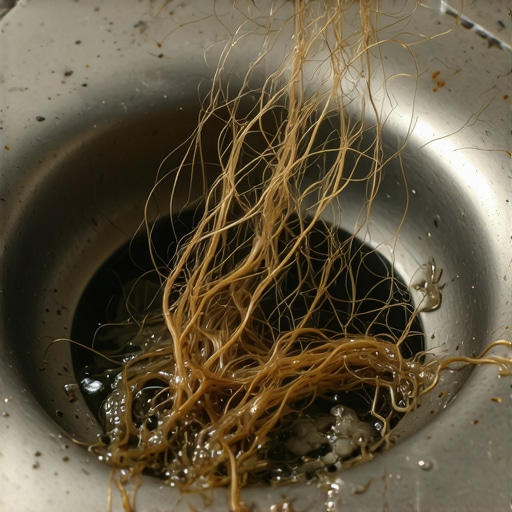
Why Your Linear Drain is Slow and the Hair-Trap Fix You’re Ignoring
Most guys skip the leveling compound. They think the underlayment will hide the dip. It won’t. I spent three days grinding concrete on a job last month just so the floor wouldn’t click like a castanet. That same sloppy attitude is why your linear drain is backing up into your walk-in shower right now. You bought the $400 brushed gold grate but ignored the physics of the slope. I have been on my knees with a moisture meter for 25 years and I can tell you that a slow drain is rarely a plumbing problem. It is an installation failure. When we talk about showers, we are talking about structural engineering disguised as a spa. If your grout is failing or your hardwood floors in the hallway are starting to cup, it is because you do not understand how water moves through a substrate. Linear drains are the peak of modern design, but they are also the most misunderstood piece of hardware in the bathroom. They require a single-slope plane that must be perfect to the millimeter. If the subfloor has even a slight deflection, the waterproofing membrane will stress and the drain body will tilt. This tilt creates a stagnant pool inside the trough where hair and soap scum coagulate into a thick, waterproof glue. I have seen beautiful laminate transitions ruined because a slow linear drain sent a microscopic wave of water back under the baseboards every single morning. You think it is just a bit of hair. It is actually a failure of maintenance and mechanical understanding.
The myth of the maintenance free shower
Linear drains require weekly cleaning of the internal basket to prevent biofilm buildup and hydrostatic pressure issues. Unlike traditional center drains, the linear trough collects debris across a wider surface area, which means hair sits in a shallow pool of water rather than being flushed immediately. This leads to a rapid accumulation of organic material. Most homeowners assume the sleek grate is the only part that matters. They ignore the basket underneath. When that basket fills, the water velocity drops. Lower velocity means more sediment stays in the trough. It is a feedback loop of failure. If you want a shower that actually works, you have to get your hands dirty. I tell my clients that if they can’t handle pulling the grate once a week, they should stick to a standard 4 by 4 center drain with a 4-way pitch. The linear drain is a high-performance machine. It needs a high-performance owner. When the water slows down, it starts to soak into the grout lines longer than intended. Even the best grout is only water-resistant, not waterproof. Over time, that standing water will find a way through the capillary pores of the cementitious grout and begin to rot the thin-set bond underneath. This is how you end up with loose tiles and a moldy smell that no amount of bleach can fix. You have to understand the chemistry of the bond. If the bond fails, the floor fails. It is that simple.
“A floor is only as good as the subfloor beneath it; deflection is the enemy of every joint.” – Master Flooring Axiom
Why your subfloor is lying to you
Subfloor deflection causes linear drains to settle and disrupts the essential two percent slope required for drainage. If your plywood or OSB has even a 1/8 inch dip over a ten foot span, your tile will eventually crack at the joints. I see it every week. A guy thinks he can just trowel on more thin-set to level the floor. That is a rookie mistake. Thin-set is an adhesive, not a leveler. It shrinks as it cures. If you have a thick bed of thin-set under a linear drain, it will pull the drain body down as it dries. Now your slope is gone. You are left with a flat spot where water sits. In my world, we use self-leveling underlayment with a primer that creates a mechanical bond to the substrate. We check the flatness with a laser level. If the floor isn’t within 1/8 inch over 10 feet, we don’t lay a single tile. This is especially true when you are transitioning from a shower to hardwood floors in the master suite. If the subfloor is moving, that moisture from the shower will travel through the joist space and affect the hardwood. You will see cupping at the thresholds. You will see the finish start to peel. It all starts with the subfloor. People focus on the tile because it is pretty. I focus on the concrete and the wood because that is what holds the house together. I smell like oak dust and joint compound most days because I spend the time doing the work that people don’t see. That is the difference between a floor that lasts 50 years and one that fails in five.
The hair trap fix you are ignoring
The secret to a fast linear drain is the removal of the secondary flow restrictor and the frequent cleaning of the hair strainer. Many modern linear drains come with a plastic hair trap that has holes too small for high-flow showerheads. If you have a rainfall head pumping out 2.5 gallons per minute, a clogged hair trap will cause an immediate backup. You need to inspect the strainer for soap curd. Soap curd is a waxy substance formed when minerals in hard water react with fatty acids in soap. It coats the hair trap and creates a waterproof film. I suggest soaking the trap in a vinegar solution once a month. This breaks down the calcium and the wax. If you ignore this, the water level in the trough rises. This creates head pressure against the waterproofing tie-in. Most linear drains use a liquid-applied membrane or a sheet membrane like Kerdi. These systems are great, but they aren’t designed to be submerged under three inches of water for an hour every morning. Eventually, the pressure will find a pinhole in the corner. Then you have a leak in the ceiling below. And it isn’t because the plumbing failed. It is because you didn’t clean the hair trap. It is a five minute fix that saves you a $10,000 restoration bill. I have seen it happen in million dollar condos. The owner spends a fortune on marble but won’t pull the drain grate.
| Grout Type | Porosity Level | Best Use Case | Maintenance Level |
|---|---|---|---|
| Sanded Grout | High | Large joints over 1/8 inch | High – Needs Sealing |
| Unsanded Grout | High | Thin joints in showers | High – Needs Sealing |
| Epoxy Grout | Near Zero | Linear drains and wet zones | Low – Chemical Resistant |
| High-Performance Cement | Moderate | General flooring and walls | Medium – Stain Resistant |
The physics of the 2 percent slope
A proper linear drain installation requires a consistent 1/4 inch per foot slope toward the drain trough. This is the golden rule of wet room geometry. If the slope is too shallow, water stays on the tile. If it is too steep, the tile is difficult to set and the slippage risk increases. I use a pitch stick system to ensure the mud bed is perfect. When you are dealing with large format tile, which is common with linear drains, you have to be even more precise. Large tiles do not bend. If there is a hump in the floor, the tile will lippage. That lip catches water and dirt. It also becomes a trip hazard. I have seen people try to install laminate or even hardwood floors right up to a curbless shower. That is a recipe for disaster unless the slope is perfect. The water must stay in the wet zone. Gravity is the only thing you can trust in this business. It doesn’t matter what the salesman at the big box store told you about waterproof flooring. If the water has nowhere to go, it will find a way into your walls. I always advocate for a recessed subfloor in the shower area. This allows us to build the slope down into the floor joists so the finished tile is flush with the rest of the room. It is a lot of work. It involves cutting joists and sistering them for strength. But it is the only way to get a true zero-threshold look that actually drains.
- Remove the grate using the provided lifting key.
- Lift out the hair strainer basket and dump all debris.
- Use a soft brush to scrub the trough with mild soap.
- Inspect the weep holes in the drain flange for blockages.
- Check the grout lines surrounding the drain for cracks or pinholes.
- Rinse the trough with hot water before replacing the grate.
Grout lines that swallow water
Standard cementitious grout is a porous material that acts like a sponge when water sits in a slow-draining trough. When a linear drain is slow, the water sits against the grout for extended periods. This is where the molecular zoom becomes important. Cement grout is a matrix of sand and Portland cement. Under a microscope, it looks like a series of caves. Water enters these caves through capillary action. If the water contains soap and skin cells, it carries those nutrients deep into the grout. This is how mold starts from the inside out. This is why I always recommend epoxy grout for linear drain installations. Epoxy is a two-part resin that is completely non-porous. It does not absorb water. It does not grow mold. It is harder to install because it is sticky and has a short working time, but it is the only way to ensure the shower remains sanitary. I have seen hardwood floors in adjacent rooms rot because moisture traveled through the grout and into the subfloor. You have to think of the shower as a pressurized vessel. Any weakness in the skin will be exploited. If you are sticking with standard grout, you must seal it every six months. But let’s be honest, nobody does that. That is why I spend my days fixing showers that were built with cheap materials. The chemistry of the grout is just as important as the physics of the drain.
“Water follows the path of least resistance; your job is to make sure that path leads to the pipe.” – Master Flooring Axiom
Hardwood floors and the bathroom humidity threat
High humidity from a poorly draining shower can cause solid hardwood floors to expand and buckle even if they never touch liquid water. Wood is a hygroscopic material. It breathes. It absorbs moisture from the air. When your linear drain is slow, the shower stays wet for hours. This keeps the bathroom humidity at 90 percent. That moisture moves into the hallway. If you have solid 3/4 inch oak, those boards will start to swell. They press against each other. Since they have nowhere to go, they cup. The edges rise higher than the center. You think you have a leak, but really you just have a ventilation and drainage problem. I always check the moisture content of the wood before and after a job. Solid wood is a living thing. In regions like Houston, solid wood in a bathroom is a death wish. You need engineered cores that are more stable. But even then, you need a drain that clears the water fast. You need a fan that actually moves air. I tell people to treat their bathroom like an engine room. It needs to be clean, it needs to be dry, and it needs to be maintained. If you ignore the hair trap, you are inviting the jungle into your house. The mold will grow behind the baseboards and under the laminate. By the time you see it, the damage is done. You will be calling me to rip it all out and start over. And I will tell you the same thing I am telling you now. Clean your drain.