
I spent three days grinding concrete on a job last month just so the floor wouldn’t click like a castanet. Most guys skip the leveling compound. They think the underlayment will hide the dip. It won’t. I have seen it a thousand times where a contractor rushes the job and leaves a 1/4 inch dip in the slab. They throw some foam down and click the laminate together. Within six months, the locking mechanisms are snapped and the homeowners are complaining about a clicking sound that drives them crazy. But the sound is the least of their worries when a bathroom remodel starts to smell like a swamp. I walk onto these jobs smelling of WD-40 and oak dust, and I can tell you exactly where the installer cut corners before I even open my toolbox. Most people think a rotten egg smell is always the plumber’s fault, but as a flooring specialist, I know that the subfloor and the grout hold secrets that can turn a beautiful bathroom into a biohazard. This is not about aesthetics. This is about structural engineering and the physics of moisture. You cannot fight the NWFA standards and expect to win. You might win for a week or a month, but the house always wins in the end.
The physics of the dry P-trap
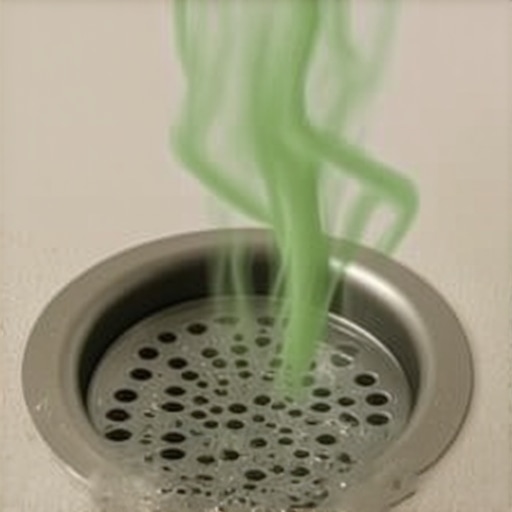
The rotten egg smell in a shower often stems from a dry P-trap which allows sewer gas to enter the home. This happens when the trap seal evaporates due to infrequent use or poor venting. Without a water barrier, hydrogen sulfide moves freely through the drainage system into your living space. If you just finished a remodel, your contractor might have let debris fall into the drain, or they may have failed to prime the system. The P-trap is a simple U-shaped pipe. Its only job is to hold enough water to block the gases from the city sewer lines or the septic tank. When you are not using that shower every day, or if the bathroom is especially hot, that water evaporates. This creates a direct air corridor between the sewer and your nose. Check the trap first. Pour a gallon of water down the drain. If the smell persists, you have a deeper structural issue related to the installation of your tiles or the subfloor integrity itself.
How microbial colonies colonize porous grout
The chemistry of grout is often overlooked because people treat it as a decorative filler rather than a porous cementitious product. When grout is not properly sealed, it becomes a breeding ground for anaerobic bacteria that produce hydrogen sulfide gas. This gas is the primary source of that rotten egg odor in remodeled bathrooms. Most installers use standard sanded grout without thinking about the moisture vapor emission rate of the slab. Grout is basically a hard sponge. If you do not seal it with a high-quality penetrant, every time you shower, the water carries skin cells, soap scum, and oils into those tiny pores. This is a buffet for bacteria. Once they settle in, they start to decay the organic matter. The byproduct of that decay is the smell you are fighting. This is why I advocate for epoxy grout in high-moisture zones, even though it is a nightmare to work with. It is non-porous and stops the smell before it starts.
“A floor is only as good as the subfloor beneath it; deflection is the enemy of every joint.” – Master Flooring Axiom
The ghost in the expansion gap
An expansion gap is a mandatory perimeter space required for laminate and hardwood floors to prevent buckling and warping. If this gap is missing or clogged with construction debris, the floor cannot expand and contract with humidity changes. This leads to structural failure and moisture entrapment. People think they are being clever by pushing the flooring tight against the wall to hide the gap under the baseboard. It is a mistake. When the humidity hits 60 percent in the summer, that wood or laminate needs somewhere to go. If it hits the wall, it starts to cup or crown. But more importantly, if you do not leave that gap, you are trapping moisture at the edges of the room. This moisture sits under the baseboards and rots the drywall and the bottom plate of your wall framing. That rotting wood smells exactly like a sewer leak. It is a musty, sulfurous odor that permeates the room. I have ripped up month-old floors that were black with mold at the edges because the installer was too lazy to leave a 1/2 inch gap. It is a basic rule, yet it is broken every day by guys who want to get home early.
Why your subfloor is lying to you
Your subfloor may look dry and level, but it often hides latent moisture that can delaminate your flooring and rot from the inside out. Using a moisture meter is the only way to verify the moisture content of a plywood or concrete subfloor before installation. If you skip this, you are gambling with the entire budget of your remodel. I have seen concrete slabs that look bone dry on the surface, but when you do a calcium chloride test, they are pumping out five pounds of vapor per thousand square feet. That vapor has to go somewhere. If you put down a vapor-impermeable floor like LVP or laminate without a proper barrier, you are creating a petri dish. The moisture gets trapped, the adhesive breaks down, and the organic components in the subfloor start to decompose. This decomposition releases gases. This is why your brand new bathroom smells like a dumpster. You did not check the slab. You did not let the wood acclimate. You trusted your eyes instead of a calibrated tool.
| Material Type | Janka Hardness | Acclimation Time | Moisture Resistance |
|---|---|---|---|
| Solid White Oak | 1360 lbf | 7-14 Days | Low |
| Engineered Maple | 1450 lbf | 3-5 Days | Medium |
| Laminate Core | N/A | 48 Hours | Low (Edges) |
| Epoxy Grout | High | None | Superior |
The 1/8 inch that ruins everything
The flatness tolerance for most hardwood floors and large format tiles is 1/8 inch over 10 feet. If the subfloor exceeds this deviation, the locking joints will fail and hollow spots will develop. This vertical movement creates a bellows effect that pumps odorous air from the subfloor into the room. When you walk across a floor that has a dip, the floor flexes. That flex acts like a pump. It pushes air out from underneath the floorboards and sucks new air in. If there is mold growth or moisture under there, you are literally pumping the smell of rot into your face every time you take a step. I spent years learning how to use self-leveling underlayment correctly. It is a liquid science. You have to prime the floor, mix it to the exact ratio, and pour it so it finds its own level. Most guys just slap some patch on the big holes and call it a day. That is how you end up with a floor that clicks and a room that smells like sulfur. Precision is not optional in this trade.
“A floor is only as good as the subfloor beneath it; deflection is the enemy of every joint.” – Master Flooring Axiom
The chemistry of anaerobic bacteria in wet thin-set
The thin-set mortar used to bond tile is a chemical compound that requires a proper cure time and moisture balance. If water becomes trapped behind the tile due to poor coverage or improper waterproofing, anaerobic bacteria flourish. These bacteria decompose organic impurities and release methane and hydrogen sulfide. This is the structural zooming I am talking about. You have to look at the microscopic level. If your installer used a spot-bonding method where they just put four dabs of thin-set on the corners of a large tile, they left huge air pockets. Those pockets fill with water. Since there is no airflow, the water becomes stagnant. Stagnant water in a dark, warm environment like a shower floor is a factory for bad smells. You might think the smell is coming from the drain, but it is actually coming through the grout lines from the stagnant pools under your tiles. You have to get 95 percent coverage in wet areas. Anything less is a failure. It is a violation of TCNA standards and a recipe for a stinky bathroom.
- Verify the P-trap is full of water by running the shower for three minutes.
- Inspect grout lines for pinholes or cracks that allow water infiltration.
- Check the moisture levels of the subfloor with a pinless meter.
- Ensure the expansion gap at the perimeter is clear of thin-set and debris.
- Test the toilet wax ring for leaks that might be saturating the subfloor.
Hardwood floors have no place in a bathroom unless you are prepared for a high-maintenance lifestyle. I tell my clients that if they want the look of wood, they should go with a wood-look porcelain tile. Real wood is a cellular structure. It is designed to move water from the roots to the leaves. Even when it is cut into planks and finished, it still wants to absorb moisture. In a bathroom, the humidity fluctuates wildly. This causes the wood to expand and contract at a rate that the finish cannot handle. Once the finish cracks, the wood absorbs water, and the rot begins. Laminate flooring is even worse. The core of most laminate is high-density fiberboard, which is basically pressed sawdust and glue. When that gets wet, it swells like a sponge and never goes back. This swelling creates gaps where water sits and stinks. If you are smelling rotten eggs, look at the transition between your shower and your flooring. If there is any swelling or discoloration, the floor is the source of your odor. While most people want the thickest underlayment, too much cushion actually causes the locking mechanisms on LVP to snap under pressure. This creates more gaps for water to enter. You need a high-density, low-compression underlayment to protect the integrity of the floor and prevent moisture traps. The smell of rotten eggs is a warning sign that your remodel is being reclaimed by the elements. Do not ignore it. Check your subfloor, verify your grout seal, and never trust a contractor who does not own a moisture meter. It is the difference between a floor that lasts a lifetime and one that rots in a year. The smell is just the beginning of the end if you do not act fast.