
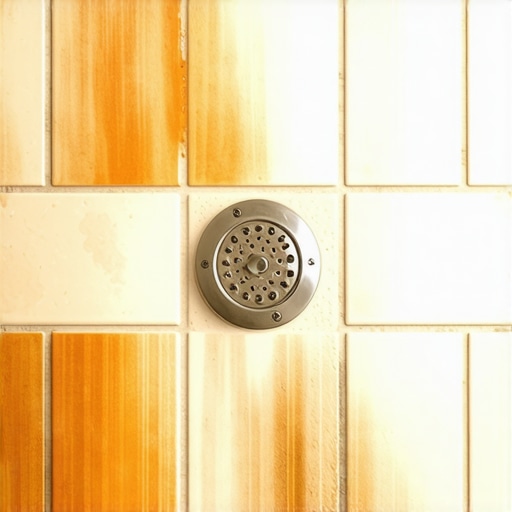
I spent three days last month grinding concrete on a job because the previous installer thought a leveling compound was optional. It was not. He thought the thick underlayment would hide the dips. It did not. The floor clicked like a castanet and eventually the locking mechanisms snapped under the pressure of a refrigerator. That is the reality of the flooring world. People focus on the color or the texture while the structural integrity is rotting from the bottom up. When you see orange stains appearing around your shower drain, you are looking at a symptom of a much deeper chemical or biological failure. It is not just a cleaning chore. It is an indicator of the water chemistry and the bacterial ecosystem thriving in your bathroom. My hands are scarred from twenty five years of handling thin-set and tile spacers, and I can tell you that the orange slime you see is rarely what you think it is.
The biological invasion in your grout lines
Orange stains near a shower drain are typically caused by Serratia marcescens, a bacterium that thrives in moist environments and feeds on fatty acids found in soap and shampoo. This airborne organism settles into the porous surface of cementitious grout and begins to colonize, producing a pigment known as prodigiosin which creates that characteristic pink or orange hue. It is not a mold, but a resilient bacterium that loves the high humidity of a bathroom. To stop it, you have to change the environment. This means reducing the standing water and removing the biofilm that serves as its food source. If your grout was never sealed, you have basically built a hotel for these microbes. They burrow into the microscopic voids of the Portland cement and wait for the next shower to provide a fresh batch of nutrients.
The chemical betrayal of iron and manganese
High concentrations of dissolved iron in your water supply will oxidize when exposed to air and cause rust colored staining on tiles and grout near the drain. This is especially common in homes with well water where the mineral content is not strictly regulated by a municipal plant. When the water exits the shower head, it is clear. However, as it sits on the floor or travels toward the drain, the iron particles react with oxygen. This is a classic oxidation reaction that turns your pristine white grout into a muddy orange mess. It is a physical change in the mineral state of your water. This staining is often more persistent than bacterial growth because the iron actually bonds with the calcium carbonate in the grout. You are essentially dyeing the floor with rust. No amount of scrubbing will solve this if the water chemistry remains unchanged.
“A floor is only as good as the subfloor beneath it; deflection is the enemy of every joint.” – Master Flooring Axiom
The hidden architecture of the shower pan
A shower floor that retains water due to a lack of proper slope will always suffer from staining because the moisture provides a permanent habitat for bacteria. The Tile Council of North America (TCNA) specifies that a shower floor must have a minimum slope of one quarter inch per foot toward the drain. If your installer was lazy and the slope is only one eighth of an inch, water will pool. This is called bird bathing. These tiny pools of water become stagnant. They collect skin cells, soap residue, and phosphorus. This becomes a concentrated soup that feeds the orange bacteria. When I build a shower, I use a pre-slope under the liner and a final slope on top. This ensures that even the water that gets past the tile finds its way to the weep holes in the drain assembly. If your weep holes are clogged with thin-set, that orange stain is the least of your worries. You likely have a swamp of gray water sitting under your tiles, slowly rotting your subfloor.
| Grout Type | Porosity Level | Stain Resistance | Best Use Case |
|---|---|---|---|
| Sanded Grout | High | Low | Wide joints over 1/8 inch |
| Unsanded Grout | High | Low | Narrow joints and polished stone |
| Epoxy Grout | Zero | Extreme | Commercial kitchens and high moisture showers |
| Pre-mixed Resin | Medium | High | DIY friendly bathroom remodels |
Why your cleaning routine is failing the tile
Using harsh acidic cleaners can etch the surface of your grout and make it more porous, which actually increases the rate of orange staining over time. People reach for the bleach or the heavy acids thinking they are winning the war. They are not. They are just opening up the pores of the cement. When you etch grout, you create more surface area for the Serratia marcescens to cling to. You are creating a jagged landscape on a molecular level that traps soap scum more effectively. The goal should be a neutral pH cleaner that breaks down the fatty acids without eating away the grout itself. You should also be looking at the hardness of your water. Hard water creates scale. Scale is a rough mineral deposit that acts like a sponge for pigments. If you have orange stains, you likely have a mineral problem that needs a water softener, not a stronger scrub brush.
- Ensure the shower is wiped down with a squeegee after every use to remove standing water.
- Check the weep holes at the base of the drain to ensure they are not blocked by debris.
- Test your water for iron and manganese levels to determine if a filtration system is necessary.
- Apply a high quality penetrating sealer to cementitious grout every six to twelve months.
- Switch to synthetic soap bars which produce less fatty acid residue for bacteria to feed on.
The chemistry of grout and the porosity problem
Cementitious grout is a hydraulic material that contains thousands of microscopic capillaries capable of wicking water and minerals deep into the floor assembly. When you see orange stains, you are often seeing the result of capillary action. The water moves into the grout, the water evaporates, and the minerals or bacteria are left behind in the concentrated center. This is why the stains are always darkest right at the drain. That is where the most water passes through. Epoxy grout is the only real solution if you want to eliminate this physics problem entirely. Epoxy is a non-porous resin. It does not have capillaries. It does not absorb the iron or the bacteria. Most builders hate it because it is difficult to spread and even harder to clean off the tile during installation. But for a homeowner, it is the difference between a floor that lasts thirty years and one that looks like a crime scene after three months.
“Proper acclimation is not a suggestion; it is the physical requirement for material stability within a controlled environment.” – NWFA Technical Manual
Why hardwood and laminate have no business here
Installing laminate or hardwood flooring in a bathroom is a structural gamble that usually ends in delamination and mold growth due to the high vapor emissions. I see people putting ‘waterproof’ laminate in bathrooms and it makes my blood boil. The surface might be waterproof, but the joints are not. When you have a shower with orange bacterial growth, that moisture is also in the air. It gets into the expansion gaps at the perimeter. It gets under the baseboards. Wood is a hygroscopic material. It wants to reach an equilibrium with the humidity of the room. In a bathroom, that humidity is constantly spiking. Solid hardwood will cup. The edges will lift. The finish will crack. Laminate has a fiberboard core that is basically compressed paper. Once it gets wet, it expands and never shrinks back. If you want the look of wood, use porcelain tile planks. They handle the moisture, the iron, and the Serratia without a second thought.
The final word on shower floor maintenance
The orange stain near your drain is a message from the physics of your house. It tells you about your water quality, your cleaning habits, and the technical skill of the person who laid the tile. If the stain is slimy and pink, it is biological. If it is gritty and reddish orange, it is mineral. You cannot ignore the subfloor and the slope. A floor is a system, not a surface. Every layer from the joists to the grout sealer must work together to move water away from the structure. If you skip a step, the chemistry of the world will find the gap. Keep the surface dry, keep the grout sealed, and understand that a bathroom is a high performance machine that requires maintenance. If you treat it like a living room, it will fail like a cheap piece of builder grade carpet. Spend the time to understand the water coming out of your pipes and the slope of the floor under your feet. That is how you build a floor that stays clean and solid for a lifetime.