
Most guys skip the leveling compound. They think the underlayment will hide the dip. It won’t. I spent three days grinding concrete on a job last month just so the floor wouldn’t click like a castanet. That is the reality of the trade. If you do not respect the physics of the flat surface, the surface will not respect you. I have seen twenty thousand dollar installations fail because someone was too lazy to run a straightedge across the slab. It is the same story with your shower grout. You see that orange stain and think it is just dirt. It is not. It is a chemical reaction happening right in the pores of your cement. It is iron. It is manganese. It is a filtration failure that is eating your bathroom from the inside out. When you are standing in that shower, you are basically standing in a laboratory of oxidation. If you want a floor that lasts, whether it is the tile under your feet or the hardwood in the hallway, you have to understand the chemistry of what is coming out of your pipes.
The rust factory in your pipes
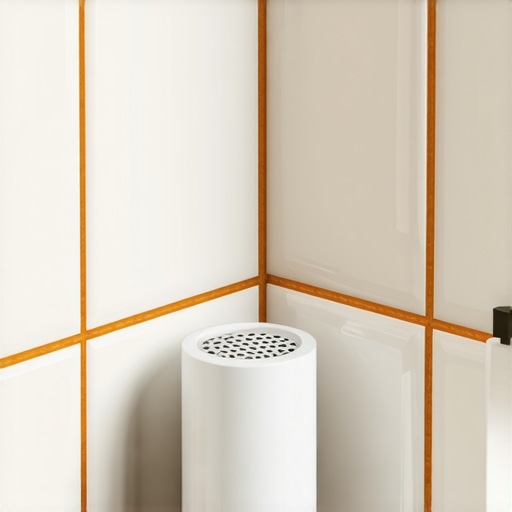
Iron oxidation and ferrous minerals are the primary reasons why shower grout turns orange. When dissolved ferric iron or iron bacteria enters the porous structure of cementitious grout, it reacts with oxygen to create a permanent rust stain. This requires a whole house water filter or a kdf-55 shower head to rectify. The process starts at the molecular level where the water travels through your plumbing. If you have well water, you are likely dealing with clear water iron. This is the sneaky kind. It looks fine in a glass, but once it hits the air in your shower, it oxidizes. It changes state. It becomes a solid particle that hitches a ride on your grout lines. Because grout is basically a hard sponge, it sucks that liquid rust right into its core. You can scrub until your knuckles bleed, but you are only cleaning the surface. The stain is deep in the matrix. This is why a filter is not just a luxury, it is a structural necessity for the longevity of your bathroom finishes.
“A floor is only as good as the subfloor beneath it; deflection is the enemy of every joint.” – Master Flooring Axiom
The porous nature of cement grout
Cementitious grout is a highly porous material composed of portland cement and aggregate that naturally absorbs liquids through capillary action. Unlike epoxy grout, which is non-porous, standard grout allows mineral deposits and iron oxides to penetrate deep into the grout joint. This creates a lasting discoloration that resists topical cleaners. Think about the way a brick absorbs water. That is exactly what your grout is doing. Every time you shower, you are feeding the grout a diet of minerals. If those minerals include iron or manganese, the orange or black staining is inevitable. I have seen people try to use bleach to fix it. Bleach is the worst thing you can do. It can actually react with certain minerals and make the stain more permanent. It also eats away at the structural integrity of the grout itself, leading to crumbling and eventual water infiltration into the subfloor. Once water gets behind that tile, you are looking at a total loss. The wood starts to rot, the mold starts to grow, and you are calling me to rip the whole thing out.
The chemistry of mineral oxidation
Manganese and dissolved iron undergo a chemical transition from soluble ions to insoluble oxides when they contact atmospheric oxygen. This oxidation-reduction reaction is the fundamental cause of orange grout stains and hard water scale. The rate of this reaction is influenced by the pH level of your water. High pH water speeds up the oxidation of iron. This means if your water is slightly alkaline, those orange stains will appear almost overnight. It is not just about the color though. These mineral deposits create a rough surface on the grout. That roughness provides a perfect anchor for soap scum and skin cells. Now you have a biological layer growing on top of a mineral layer. It becomes a ecosystem. To stop this, you have to break the chain at the source. You need to pull the minerals out of the water before they ever reach the shower head. This is where filtration science meets home maintenance. A high quality filtration system will use ion exchange or oxidation filters to grab those metallic ions and flush them away before they can ruin your day.
How moisture destroys adjacent hardwood floors
Secondary moisture migration occurs when shower leaks or high humidity travel through subfloor materials to affect hardwood flooring or laminate planks. This results in cupping, crowning, and delamination of the wood fibers due to an increase in the moisture content of the wood. Most people do not realize that their bathroom problem is actually a hallway problem. I have walked into jobs where the master bedroom oak floor was buckled two inches off the joists. The culprit was a slow leak in the shower pan three rooms away. Wood is a hygroscopic material. It wants to be in equilibrium with its environment. If the air in your bathroom is a swamp because of poor ventilation and mineral clogged drains, that moisture is going to find a way into the floor. Solid hardwood is particularly sensitive. It will expand across the grain until it hits a wall, and then it has nowhere to go but up. Even engineered wood with a thick wear layer can only handle so much. You have to keep the moisture contained and the mineral load low to protect the rest of the house architecture.
| Mineral Type | Staining Color | Physical Effect | Filter Solution |
|---|---|---|---|
| Ferrous Iron | Bright Orange | Surface Pitting | Water Softener |
| Manganese | Black or Grey | Sludge Buildup | Oxidizing Filter |
| Calcium | White Crust | Flow Restriction | Ion Exchange |
| Iron Bacteria | Slimy Orange | Odor and Biofilm | Chemical Feed |
The filtration solution for heavy minerals
Filtration systems for hard water must include catalytic carbon or ion exchange resins to effectively remove iron and manganese. A multi-stage shower filter can reduce chlorine and heavy metals, preventing the oxidation that leads to orange grout. If you are serious about this, you do not just buy the cheapest plastic filter at the big box store. You look at the micron rating. You look at the media inside. KDF-55 is a high-purity copper-zinc formulation that uses a basic chemical process called redox to remove chlorine, lead, mercury, and iron. It is what I recommend to anyone who is seeing those rust streaks. But if your whole house is affected, you need a tank system. You need to treat the water where it enters the building. This protects your water heater, your dishwasher, and your expensive flooring. I have seen copper pipes narrowed to the size of a straw because of scale buildup. That is pressure you are losing. That is money you are throwing away on repairs that could have been avoided with a simple filter install.
“Standard grout is essentially a sidewalk in your shower; treat it with the same respect for porosity you would a basement slab.” – TCNA Installation Handbook Insight
The 1/8 inch that ruins everything
Subfloor flatness is required to be within 1/8 inch over 10 feet for most large format tile and hardwood installations according to NWFA standards. Failure to achieve this levelness leads to cracked grout joints and structural failure of the flooring system. When your subfloor is not flat, the tile flexes. When the tile flexes, the grout cracks. Once the grout cracks, you have an open highway for water to get into the wooden structure of your home. This is why I spend so much time with the grinder and the self-leveling underlayment. You cannot build a skyscraper on a sand dune. You cannot put a beautiful shower on a wavy subfloor. I have seen guys try to use extra thin-set to make up the difference. That is a hack move. Thin-set is not a leveler. It shrinks as it cures. If it is too thick, it will pull the tile down and create lippage. That lippage catches water, catches dirt, and becomes a breeding ground for that orange gunk we are trying to avoid. Do the work on the prep, and the finish will take care of itself.
- Test the water supply for total dissolved solids and iron ppm levels.
- Check the subfloor for deflection and levelness before any tile is laid.
- Apply a high quality penetrating sealer to all cementitious grout lines.
- Install a whole house filtration system to manage mineral oxidation.
- Maintain a consistent humidity level between 30 and 50 percent in the home.
- Ensure the shower ventilation fan is rated for the square footage of the room.
The structural reality of subfloor leveling
Mechanical grinding and cementitious leveling compounds are the only approved methods for correcting subfloor irregularities in a high-moisture environment. Using plywood shims or excessive adhesive will result in delamination and joint failure over time. I once spent a week on my hands and knees in a mid-century modern remodel. The slab was a disaster. It looked like the rolling hills of Kentucky. The homeowner wanted wide-plank maple. I told him if we did not grind that slab flat, he would have a floor that sounded like a bag of potato chips within a month. He didn’t want to pay for the prep. I walked off the job. Two years later, I got the call to come back and fix it. The maple had buckled, the grout in the adjacent bathroom had shattered, and the whole house smelled like damp wood. We ended up ripping everything out. That is what happens when you ignore the physics. You have to respect the bond. You have to respect the chemistry. Whether it is the iron in your water or the dip in your floor, the details are what keep the house standing. Do not be the person who spends ten thousand on tile and zero on the water that touches it. Get the filter, fix the subfloor, and do it right the first time.