
The microscopic truth about marble porosity
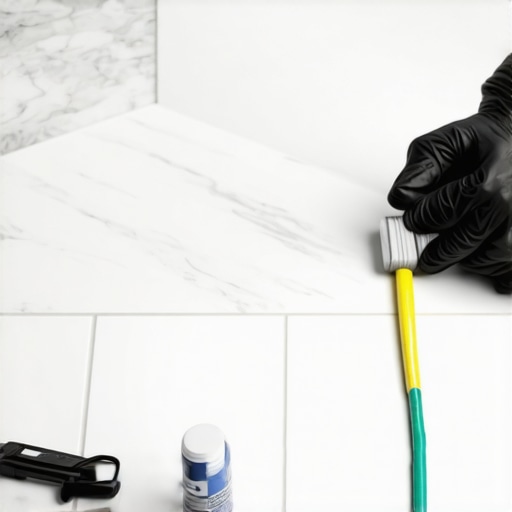
Marble shower floors require a high quality penetrating sealer because the stone is a metamorphic rock composed of calcium carbonate that remains naturally porous. Without a chemical barrier, water and body oils will penetrate the crystalline structure, causing permanent staining, mildew growth, and structural degradation of the mortar bed below. Most homeowners look at a piece of Carrara or Calacatta marble and see a solid surface. I see a sponge. I have spent twenty five years on my knees with a grinder and a level, and I can tell you that marble is a living, breathing material. It has a capillary system that will pull moisture deep into its core if you let it. I once spent three days grinding concrete on a job last month just so the floor wouldn’t click like a castanet, and that same level of obsession is required when sealing stone. If the subfloor is not perfectly rigid, the grout lines will micro fracture, and once that happens, no amount of sealer in the world will save your shower from the rot that starts in the dark spaces underneath.
“A floor is only as good as the subfloor beneath it; deflection is the enemy of every joint.” – Master Flooring Axiom
Why your subfloor is lying to you
Subfloor deflection and moisture vapor drive are the primary causes of failed marble shower installations. Stone requires a subfloor stiffness rating of L/720 to prevent the brittle tiles from cracking under the weight of a person or the movement of the house. I have walked into too many bathrooms where a fifteen thousand dollar marble floor was ruined because the guy before me didn’t understand the physics of the joists. If your subfloor has even a slight bounce, the bond between the marble and the thin set will eventually fail. This creates a pocket where water can sit and stagnate. When we talk about sealing marble, we are not just talking about the top surface. We are talking about protecting the integrity of the entire assembly. You need to ensure that the waterproofing membrane, whether it is a liquid applied product or a sheet membrane, is perfectly bonded to the substrate. I smell like WD-40 and oak dust most days because I stay in the trenches of the prep work. The sealer is just the final layer of a very complex engineering puzzle.
The chemical bond of high performance impregnators
Impregnating sealers work through a process of molecular deposition where the active solids, usually silanes or siloxanes, settle into the pores of the marble. Unlike topical sealers that sit on the surface, these chemicals change the surface tension of the internal pore walls to repel water and oil. When you apply a solvent based impregnator, the carrier fluid carries the protective resins deep into the stone. As the solvent evaporates, the resins remain. This is why you must use a high quality product. Cheap big box store sealers use low grade resins that break down within months. A professional grade sealer will provide a bond that resists the high alkaline environment of a shower. You are looking for a product that allows the stone to breathe. If you trap moisture inside the stone with a topical acrylic sealer, the marble will eventually turn gray or even yellow as the iron minerals inside the stone begin to oxidize. It is a slow death for a beautiful floor.
| Sealer Category | Carrier Liquid | Protection Level | Vapor Permeability |
|---|---|---|---|
| Solvent Based | Mineral Spirits | High Oil Resistance | Breathable |
| Water Based | H2O | Standard Water Resistance | High |
| Topical Coating | Polymer Resins | Low (Not for Showers) | Non Breathable |
A checklist for surface preparation
- The stone must be clean and free of all grout haze or construction dust.
- The floor must be completely dry for at least forty eight hours to ensure no trapped moisture.
- All grout lines must be fully cured according to the manufacturer specifications.
- Check the room temperature to ensure it is between fifty five and eighty degrees Fahrenheit.
- Turn off any radiant floor heating twenty four hours before the application.
The 1/8 inch that ruins everything
Proper drainage on a marble shower floor requires a minimum slope of one quarter inch per foot toward the drain. If the stone is not pitched correctly, water will pool and overwhelm the sealer through sheer hydraulic pressure. I have seen installers get lazy with the mud bed. They think they can make it up with the thin set. They are wrong. When water sits on marble, it exerts constant pressure on the sealer. Eventually, the water wins. You need to verify the slope with a level before a single tile is set. If you find a flat spot, you grind it down or you build it up. You do not ignore it. I carry a marble in my pocket to test the pitch. If that marble doesn’t roll straight to the drain, the floor is a failure. This is the difference between a floor that lasts fifty years and one that starts smelling like a swamp in six months. Stone is heavy and unforgiving. It demands respect for the laws of gravity.
“Proper slope to drain and moisture management are the non negotiable pillars of a successful stone shower installation.” – TCNA Handbook Standards
The ghost in the expansion gap
Movement joints are essential in marble shower floors to accommodate the expansion and contraction of the stone during temperature changes. A failure to provide a soft joint at the perimeter and at changes of plane will cause the stone to tent or the grout to crumble. I call it the ghost because you don’t see the movement until it’s too late. You hear a pop in the middle of the night. That is your stone breaking because it had nowhere to go. You must use a hundred percent silicone sealant in the corners and where the floor meets the wall. Do not use hard grout in these areas. The sealer won’t help you if the stone itself is under structural stress. You need to allow for that one eighth inch gap. It might look better to have a tight joint, but a tight joint is a ticking time bomb. I have seen guys lose their shirts on warranty calls because they wanted a seamless look. In the world of flooring, seamless usually means a future headache.
The reality of maintenance cycles
Marble maintenance is a continuous process that involves using pH neutral cleaners and reapplying sealer every twelve to eighteen months. Using acidic cleaners like vinegar or lemon juice will etch the surface, destroying the sealer and the stone polish instantly. People want a maintenance free life, but you don’t buy a Ferrari and then never change the oil. Marble is the luxury car of flooring. You have to treat it with care. I tell my customers to use a squeegee after every shower. It takes thirty seconds, but it removes the bulk of the minerals that would otherwise build up on the stone. If you see the water stop beading on the surface, that is your signal. It means the sealer has worn down and the stone is vulnerable. You clean it, let it dry for two days, and you apply another coat. It is a simple ritual that preserves a massive investment.
Final thoughts on moisture management
Sealing a marble shower floor correctly requires patience and a deep understanding of the chemical properties of both the stone and the protective agents. By focusing on subfloor rigidity, proper slope, and high quality impregnating sealers, you ensure a lifetime of performance. Do not cut corners. Do not buy the cheapest thin set. Do not rush the drying time. The stone has been in the ground for millions of years. It can wait another day for you to do the job right. I would rather spend an extra day on my knees making sure the prep is perfect than spend a week tearing out a failed job. That is the philosophy of a master installer. Respect the materials, and the materials will respect you. Keep your tools clean and your levels true. That is how you build a floor that outlasts the house around it.