
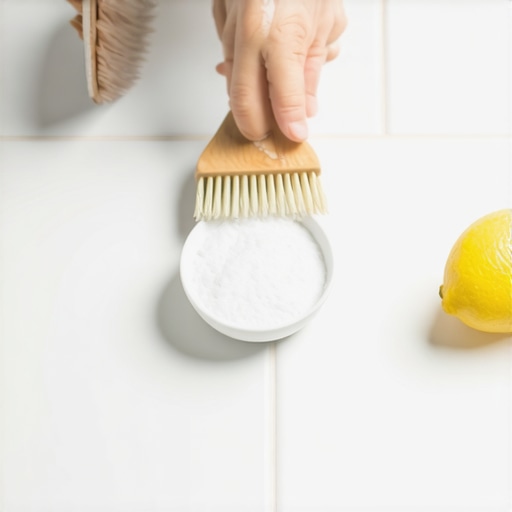
I spent three days grinding concrete on a job last month just so the floor wouldn’t click like a castanet. After I finished that 1,200 square foot porcelain install, I watched the homeowner walk in with a bottle of acidic vinegar and a scrub brush. It nearly broke my heart. Most guys skip the leveling compound and homeowners skip the chemistry lessons. They think grout is just a filler, but it is a structural component that bridges the gap between your investment and the subfloor. When you use harsh chemicals, you are not just cleaning. You are etching the very cement that holds your floor together. I have seen million dollar homes where the grout was turned to sand because someone thought bleach was a good idea. Cleaning grout is about physics and alkalinity, not raw aggression.
The microscopic reality of porous cement
Grout is a cementitious product that functions as a porous bridge between tiles. It consists of sand, cement, and pigments that form a rigid, breathable structure once cured. Because it is essentially a stone sponge, it absorbs moisture and particulates at a molecular level through capillary action. When you look at grout through a magnifying glass, you see a landscape of tiny voids. These voids are where dirt, skin cells, and soap scum reside. To clean it, you must use a solution that lowers the surface tension of water to penetrate these microscopic holes without dissolving the calcium carbonate that gives the grout its strength. Acidic cleaners like vinegar or lemon juice react with the lime in the cement. This reaction creates a gas and dissolves the binder. Over time, your grout becomes brittle and starts to flake out. You are literally eating your floor from the inside out. Instead, we look toward alkaline cleaners that break down organic fats and oils without attacking the mineral structure of the grout itself.
“Grout is a structural component of the assembly, providing lateral support to the tile units.” – Master Flooring Axiom
Why bleach is a chemical lie
Bleach is an oxidizer that removes color from stains but does nothing to remove the actual dirt or grime embedded in the grout. It creates the illusion of cleanliness by turning organic matter white. Underneath that white surface, the bacteria and oils remain trapped in the pores of the cement. Furthermore, bleach is highly alkaline in a way that can leave a salt residue. This residue attracts more dirt. It is a cycle of failure. If you live in a high humidity region like Houston or Miami, using bleach in your showers can actually make the grout more susceptible to mold over time by making the surface more porous. You want a cleaner that lifts the dirt out, not one that hides it. We use surfactants for this. A surfactant molecule has a water loving head and an oil loving tail. It grabs the grease in your grout and pulls it into the water so you can wipe it away. This is the only way to maintain the integrity of the bond between the tile and the thin-set. If you compromise the grout, you allow moisture to seep behind the tile, which leads to substrate rot and eventual floor failure.
Comparison of common cleaning agents
| Cleaner Type | pH Level | Effect on Grout Structure |
|---|---|---|
| White Vinegar | 2.5 | High Damage (Dissolves Lime) |
| Commercial Bleach | 11.0 | Surface Brittleness |
| Baking Soda | 9.0 | Safe (Mechanical Agitation) |
| Oxygen Bleach | 10.5 | Safe (Oxygen Lift) |
| Steam | 7.0 | Safe (Thermal Expansion) |
The physics of the steam extraction method
Steam cleaning uses thermal energy to expand the pores of the grout and liquefy hardened oils without the need for surfactants or acids. When water is heated to 250 degrees Fahrenheit and forced through a narrow nozzle, it carries immense kinetic energy. This heat penetrates the grout line and breaks the molecular bond between the dirt and the cement walls. It is the most effective way to clean without chemicals. I always tell people that a good steam cleaner is cheaper than a new floor. You aren’t just wetting the surface. You are vaporizing the contaminants. After steaming, you must immediately wipe the area with a microfiber cloth. If you let the water cool, the dirt will simply settle back into the pores as they contract. It is a process of expansion and capture. This is especially vital in showers where body oils and silicones from shampoos build up a waterproof barrier over the grout that standard cleaners cannot touch. The heat melts that wax, allowing the grout to breathe again. This prevents the moisture traps that lead to tile delamination.
The oxygen bleach solution for deep stains
Oxygen bleach, or sodium percarbonate, works by releasing oxygen ions that physically break apart the chemical chains of stains within the grout. Unlike chlorine bleach, it does not destroy the pigments or the cement binder. You mix the powder with warm water to activate the oxygen. When you apply it to the grout, you will see it bubbling. That is the sound of work being done. Those bubbles are physically pushing the dirt out of the pores. Let it sit for at least twenty minutes. This gives the chemistry time to work so you do not have to use a heavy hand with the brush. Use a nylon brush, never steel. A steel brush will leave metal fragments in the grout that will later rust, leaving permanent orange streaks. You want to work in small sections. Focus on the intersections where four tiles meet. That is the weakest point of the installation and where the most dirt accumulates. Once the bubbling stops, the reaction is complete and you can rinse with clear water. This leaves the grout pH neutral and structurally sound.
Grout maintenance and protection checklist
- Test the grout hardness with a fingernail to ensure it is not already crumbling.
- Apply an alkaline pre-spray to emulsify surface oils.
- Use a stiff nylon brush in a circular motion to agitate the pores.
- Rinse with distilled water to prevent mineral buildup from tap water.
- Allow the grout to dry for 48 hours before applying a high quality sealer.
- Check the expansion gaps at the room perimeter to ensure they are not filled with grout.
The 1/8 inch that ruins everything
Proper grout cleaning requires understanding the width and depth of the joint because narrow joints trap more surface tension than wider ones. If you have a 1/16 inch joint, you are dealing with significant capillary pressure. Water wants to stay in that tiny gap. You have to use more mechanical force or higher heat to displace it. If you have 1/4 inch joints, the grout is likely sanded. Sanded grout is even more porous because the sand grains create larger voids. These require more frequent sealing. I see people forget to seal their grout all the time. A sealer is not a permanent shield. It is a sacrificial layer. It fills those microscopic pores so the dirt has nowhere to go. If you are cleaning your grout every month with harsh chemicals, you are stripping that sealer off. You should only need a deep clean once a year if you are using pH neutral cleaners for weekly maintenance. Hardwood floors and laminate have their own issues, but tile is meant to be the forever floor. Don’t ruin it by being too aggressive with the chemicals. Treat the grout like the structural mortar it is.
“A floor is only as good as the subfloor beneath it; deflection is the enemy of every joint.” – TCNA Handbook