
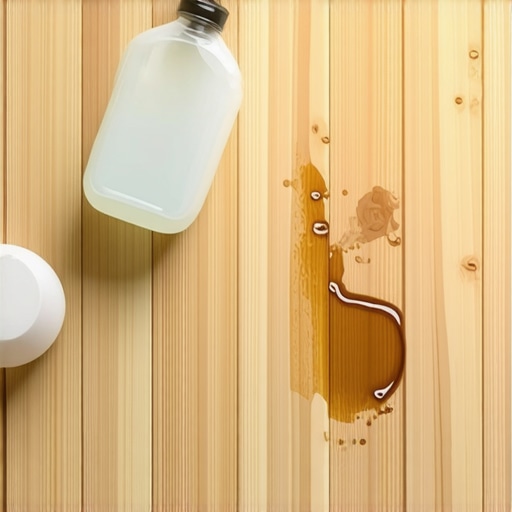
The chemical reality of cleaning your hardwood floors
Dish soap destroys hardwood floors because it contains aggressive surfactants and degreasers designed to break down organic fats. These same chemicals emulsify the polyurethane resins and protective sealants on your flooring, leading to a cloudy residue, finish failure, and moisture infiltration into the wood cellular structure. I once walked into a house where a $15,000 wide-plank walnut floor was cupping so bad it looked like a potato chip because the installer did not check the crawlspace humidity and the homeowner had been mopping with a bucket of Dawn and hot water. The soap had stripped the finish at the edges, allowing the water to penetrate the tongue and groove joints. The physics of that failure were simple. The wood expanded at the bottom while the top was held tight by the remaining finish, forcing the planks to curl upward. It was a total loss. This is the reality when you treat a performance surface like a dinner plate. Hardwood is a living, breathing structural element. It reacts to the environment on a molecular level. Using a high pH cleaner on a wood surface is essentially a slow chemical burn. Most people think they are being frugal. They are actually accelerating a floor replacement that will cost them tens of thousands of dollars.
The ghost in the expansion gap
Expansion gaps are the perimeter voids between your hardwood floors and the drywall or baseboards that allow for hygroscopic movement. When you use dish soap and excessive water, the liquid migrates into these gaps, sits on the subfloor, and creates a micro-climate for mold growth and structural rot. I have spent twenty five years watching people ruin beautiful oak because they do not understand the 1/8 inch rule. If that gap is filled with soapy water, the wood cannot move. It expands, hits the wall, and the floor buckles in the center of the room. It sounds like a gunshot when it happens. The soap acts as a lubricant that allows the wood to slip past the fasteners, weakening the mechanical bond between the plank and the subfloor. Once that bond is gone, your floor starts to creak. Every step sounds like a rusty hinge. This is not a cosmetic issue. It is a structural failure caused by improper maintenance.
“A floor is only as good as the subfloor beneath it; deflection is the enemy of every joint.” – Master Flooring Axiom
How surfactants destroy the chemical bond of wood sealants
Surfactants are surface active agents that reduce the surface tension of water, allowing it to penetrate micro-fissures in the polyurethane wear layer. When these molecules wedge themselves between the finish and the wood grain, they cause delamination and a dull appearance that no amount of buffing can fix. Wood is made of lignin and cellulose. The finish is a long chain polymer. Dish soap is designed to attack bonds. When you apply it to a floor, you are asking for a chemical divorce. The soap molecules stay behind long after the water has evaporated. They attract dust. They attract skin oils. They create a sticky film that actually makes the floor get dirtier faster. You end up in a cycle. You see the floor is dull, so you use more soap. The more soap you use, the more finish you strip. Eventually, you are walking on raw wood that has been saturated with gray, soapy sludge. This is especially dangerous in high humidity regions like Houston or New Orleans where the air already wants to warp your planks. In those climates, the soap acts as a sponge, pulling moisture from the air and holding it against the wood fibers.
| Cleaner Type | pH Level | Surface Impact | Residue Factor |
|---|---|---|---|
| Dish Soap | 8.0 to 9.5 | Strips poly resins | High / Sticky |
| White Vinegar | 2.4 to 3.0 | Etches finish | Low / Acidic |
| pH Neutral Wood Cleaner | 7.0 | Safe for sealants | Zero |
| Steam Mops | N/A | Thermal shock / Peeling | None |
Why your subfloor is lying to you
Subfloor moisture is the silent killer of hardwood installations because plywood and OSB act as wicking agents for any liquid cleaner that seeps through the seams. If you are using a string mop and dish soap, you are dumping gallons of fluid onto a surface that is only designed to be damp wiped. The water finds the nail holes. It finds the end joints. It travels down to the joists. I have seen subfloors that were so saturated from years of “deep cleaning” that the cleats simply pulled out of the wood. The homeowner thought the floor was just getting old. In reality, the structural integrity of the fastening plane had been compromised by soapy water. This is why the NWFA is so strict about moisture content. You want a 2 percent or less difference between your hardwood and your subfloor. When you mop with soap, you spike that difference. The wood swells, the cells rupture, and the floor is ruined. It is a slow, expensive mistake that starts in the kitchen sink.
The 1/8 inch that ruins everything
Precision leveling requires that a subfloor has no more than 1/8 inch of deviation over a 10 foot radius to prevent hollow spots and clicking. When you use soapy water, it pools in these low spots, creating pockets of rot that you cannot see from the surface. I spent three days grinding concrete on a job last month just so the floor would not click like a castanet. If that customer had used dish soap, the water would have collected in the micro-valleys I worked so hard to eliminate. Even in showers and wet areas, we use waterproof membranes and specialized grout to manage moisture. Your living room floor does not have those protections. Hardwood is an interior finish, not an exterior siding. Treating it like it is waterproof is the quickest way to end up with a mold problem under your laminate or hardwood. You have to respect the capillary action of wood. It will suck up that soapy water like a straw.
- Never use a saturated mop on any wood surface.
- Avoid cleaners with citrus, oil, or ammonia.
- Use a microfiber pad that is barely damp to the touch.
- Monitor indoor humidity and keep it between 35 and 55 percent.
- Vacuum with a soft brush attachment to remove grit before cleaning.
The physics of moisture in a tongue and groove system
Tongue and groove joints are engineered to allow for lateral expansion, but they are the weakest point for fluid ingress. When soapy water enters the groove, it gets trapped by the tongue, creating a hydrostatic pressure situation that forces moisture deep into the core of the wood. This is where the real damage happens. The wood fibers expand at different rates. The Janka hardness of the wood does not matter once the lignin starts to break down. Even a Brazilian Cherry floor with a high Janka rating will fail if the joints are constantly saturated with alkaline cleaners. I have seen laminate floors peak at the edges because the MDF core soaked up soapy water and swelled like a sponge. Once that core expands, it never goes back down. You are left with hard ridges at every seam. It looks terrible and it feels even worse underfoot.
“Wood flooring is a hygroscopic material, meaning it constantly gains and loses moisture to reach an equilibrium with its environment.” – NWFA Technical Manual
What happens when moisture hits the subfloor layers
Vertical deflection in a subfloor increases when the structural panels are weakened by repeated exposure to cleaning solutions and moisture. This leads to fastener pull-out and localized floor failure. If you are cleaning a floor near grout lines or transition strips, the soap can also break down the thin-set or adhesive used in adjacent rooms. I have seen tile floors start to pop because the homeowner was mopping the nearby hardwood with so much soapy water that it ran under the T-molding and dissolved the bond of the ceramic tile. It is a chain reaction of material failure. You have to think about the entire floor system. From the joists to the wear layer, every component is sensitive to pH levels and moisture volume. Stop using dish soap. Invest in a pH neutral cleaner specifically formulated for polyurethane. Your floors, and your wallet, will thank you. Most guys skip the leveling compound. They think the underlayment will hide the dip. It won’t. I have seen it time and again. If you don’t respect the chemistry of your floor, the physics of its failure will be inevitable. Professional maintenance is not a suggestion. It is a requirement for the longevity of your home. If you want a floor that lasts fifty years, keep the dish soap in the kitchen where it belongs.