
Why your subfloor is lying to you
Subfloor flatness is the most critical factor in any laminate installation. If your concrete slab or plywood deck has a deviation of more than one eighth of an inch over a ten foot radius, your floating floor will fail. The locking mechanisms will stress and eventually snap under the weight of foot traffic. I spent three days grinding concrete on a job last month just so the floor wouldn’t click like a castanet. Most guys skip the leveling compound. They think the underlayment will hide the dip. It won’t. I have seen fifteen thousand dollar wide-plank installs ruined because the guy was too lazy to pull a straight edge. You have to understand the physics of deflection. When you step on a plank over a void, that plank bends. The tongue and groove are not designed to be structural beams. They are just there to hold the planks together horizontally. If you ignore the subfloor, you are just building a ticking time bomb of floor failure. One month in, the homeowner calls because the floor feels like a trampoline. By then, it is too late to fix it without pulling up every single row. Don’t be that guy. Get your level out before you even open a box of material.
The structural failure of the eyeball method
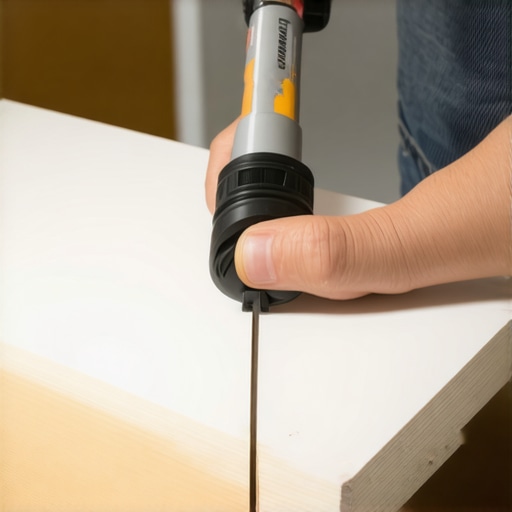
Laminate flooring requires exact tolerances around door casings and corners to maintain the expansion gap. Using a contour gauge allows an installer to transfer complex shapes directly to the plank without measurement error. This five dollar tool prevents wasted material and poor fits that lead to buckling or gapping. I have watched apprentices burn through three boxes of high-end laminate trying to scribe a simple door jamb with a tape measure. It is painful to watch. They think they have a good eye, but their eye is not a precision instrument. The contour gauge, or profile gauge, is a series of plastic or metal pins set tightly in a frame. You push it against the weird shape of the baseboard or the pipe coming out of the floor, and the pins slide to mimic the exact outline. You then lay it on your plank, trace it with a carpenter pencil, and cut. It is simple. It is fast. It saves you from looking like an amateur. If you are trying to eyeball a 45-degree angle around a curved wall, you are going to leave a gap that even the thickest baseboard cannot hide. [IMAGE_PLACEHOLDER]
“A floor is only as good as the subfloor beneath it; deflection is the enemy of every joint.” – Master Flooring Axiom
The physics of the profile gauge
Profile gauges work through mechanical friction to replicate shapes with millimeter precision. By locking the pins into place, an installer can transfer the profile of a molding to the laminate surface. This ensures the HDF core of the laminate remains protected from moisture infiltration at the cut edges. When you are working with laminate, you are working with a high-density fiberboard core. This core is basically compressed sawdust and resin. It is incredibly stable until you cut it. Once that factory edge is gone, you have exposed the sponge. If your cut is sloppy and leaves too much space, or worse, if it’s too tight and you force it in, you are asking for trouble. A tight fit prevents the floor from moving. Floors need to move. They breathe. In the summer, the humidity goes up and the floor grows. In the winter, the heater kicks on, the air dries out, and the floor shrinks. If your corner cut is jammed against the wall, the floor has nowhere to go but up. That is how you get peaks in the middle of your living room.
The ghost in the expansion gap
Expansion gaps are the non-negotiable spaces between the flooring and any vertical surface. A quarter inch gap allows the planks to expand and contract without structural binding. Failure to maintain this gap at corners and doorways will cause the floor to buckle as the ambient humidity changes. People think waterproof laminate means it is immune to physics. It isn’t. The top is plastic, sure, but the rest is still wood based. Even the stone-polymer composite floors need room. I have seen floors rip the baseboards right off the wall because the installer didn’t leave enough space. You need that gap everywhere. Around the pipes. Around the kitchen island. Especially at the corners where the geometry gets tricky. That is where the profile gauge becomes your best friend. It lets you get the shape perfectly right while still maintaining that necessary quarter-inch of breathing room. You don’t want the floor touching anything solid. It should be a giant island floating in your house. If it touches a single wall, the whole system is compromised.
| Material Type | Expansion Requirement | Required Tool | Acclimation Time |
|---|---|---|---|
| Laminate HDF | 1/4 Inch | Profile Gauge | 48 Hours |
| Engineered Oak | 1/2 Inch | Jigsaw | 72 Hours |
| Solid Hardwood | 3/4 Inch | Moisture Meter | 7-10 Days |
| Vinyl Plank (SPC) | 1/4 Inch | Utility Knife | 24 Hours |
The chemistry of laminate wear layers
Melamine resin provides the protective wear layer on top of laminate planks. This aluminum oxide coating is rated by the AC rating system to determine durability. A higher AC rating indicates a thicker wear layer capable of resisting scratches and impacts in high traffic areas. When you are cutting these corners, you are literally cutting through one of the hardest man-made substances used in residential construction. Aluminum oxide is what they use to make sandpaper. That is why your jigsaw blades go dull so fast. If you try to use a cheap blade on a complex corner cut, the blade will heat up and melt the resin rather than cutting it. This creates a charred edge that looks terrible and can actually prevent the plank from seating properly. I always tell people to buy the 20-pack of blades. Change them often. A dull blade is a dangerous blade and a messy blade. You want a clean, crisp edge so that your transition strips and baseboards sit flush. Any burr on the edge of that HDF core will soak up moisture like a wick. If you’re doing a kitchen or a bathroom, that edge is the weak point. One spilled glass of water and your floor is toast if the edges aren’t tight and sealed.
- Check subfloor levelness with a ten foot straight edge
- Acclimate the laminate in the room for at least forty eight hours
- Use a profile gauge for every door casing and corner
- Maintain a consistent quarter inch expansion gap around all perimeters
- Vacuum every row before clicking the next one into place to avoid grit in the joints
- Seal the expansion gaps in wet areas with 100 percent silicone caulk
The humidity factor in the American South
High humidity in regions like Florida or Louisiana creates extreme expansion cycles for laminate flooring. The moisture content of the subfloor must be verified with a calibrated meter before installation begins. In swampy climates, a six mil poly vapor barrier is mandatory to protect the fiberboard core from hydrostatic pressure. If you live in a place where the air feels like a wet blanket, you cannot treat your floor like they do in the desert. The slab is always breathing moisture. If you don’t put down a vapor barrier, that moisture goes straight into the bottom of your laminate. The planks will swell from the bottom up, causing the edges to curl. We call this cupping. Once a laminate floor cups, it is garbage. You can’t sand it down like real wood. You just have to rip it out and start over. That five dollar tool won’t save you if you don’t have the moisture barrier underneath it. It is all about layers. The slab, the barrier, the underlayment, and then the floor. Each one has a job to do. If one fails, the whole system fails.
“Floor covering is a system, not a product; every component must work in harmony with the local environment.” – NWFA Technical Guidelines
The 1/8 inch that ruins everything
Precision cutting at floor transitions prevents tripping hazards and structural gaps. The T-molding or reducer strip must overlap the laminate by at least one eighth of an inch while still allowing movement. If the corner cut is too short, the transition strip will not cover the edge, leading to an exposed HDF core. This is where the profile gauge really proves its worth. When you are coming up to a fireplace hearth or a sliding glass door, the shape is rarely a straight line. If you cut it short by even an eighth of an inch, you are looking at a gap. You can try to fill it with caulk, but it will look like a hack job. I have seen guys try to use wood filler on laminate. It never matches, and it always cracks out within a week. The only way to get it right is to cut it right the first time. The profile gauge takes the guesswork out of it. You press, you trace, you cut. It is a three second process that saves you an hour of frustration. Don’t be the guy who thinks he can just hide the mistakes with shoe molding. Do it right. Use the tool. Save your knees and your reputation.