
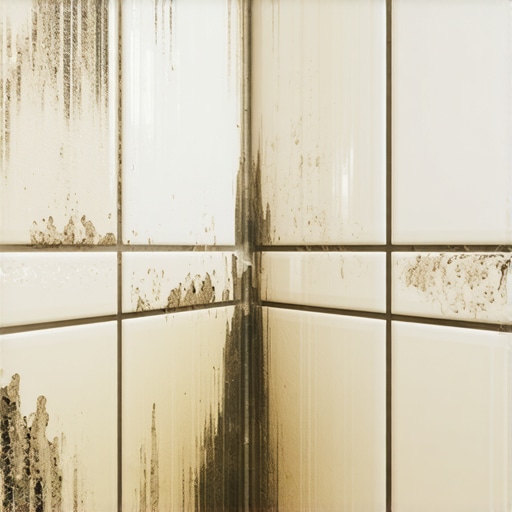
I smell like oak dust and the metallic bite of a wet saw most days. My hands are calloused from twenty-five years of pulling up failed flooring and my knees have seen more subfloors than most people see clouds. I spent three days grinding concrete on a job last month just so the floor wouldn’t click like a castanet because the previous guy thought he could float a floor over a mountain range. Most guys skip the leveling compound. They think the underlayment will hide the dip. It won’t. I have seen the same lazy approach ruin ten thousand dollar bathrooms. You see mildew on your shower floor and you reach for the bleach. You are wasting your time. The mildew is not the problem. It is a symptom of a structural failure hidden three inches below your feet. I am talking about the physics of the assembly, the chemistry of the grout, and the total lack of understanding regarding how water moves through a substrate.
[IMAGE_PLACEHOLDER]
The lie of the waterproof surface
Shower mildew persists because the underlying substrate is retaining moisture that cannot escape through the surface layer. Most homeowners and even some mediocre contractors believe that tile and grout are waterproof. They are not. Ceramic tile is dense but it is the grout that acts as a sieve. Standard cementitious grout is a porous network of Portland cement and sand. It absorbs water through capillary action. When you shower, you are not just getting the surface wet. You are charging the mortar bed below with water. If that moisture cannot drain properly through the weep holes in your drain assembly, it sits there. It becomes a stagnant pond under your feet. This is where the mildew lives. It eats the soap scum that filters through the grout and thrives in the dark, warm environment of your subfloor. It is a structural engineering failure, not a cleaning issue.
Why your subfloor is lying to you
Subfloor deflection and improper slope are the primary drivers of moisture accumulation in residential showers. A floor is not just a flat plane. It is a dynamic structural element. If your joists have too much bounce, the movement cracks the grout lines. These micro-cracks are invisible to the eye but they are highways for water. The TCNA has strict rules for deflection, typically L over 360 for ceramic tile. If your subfloor flexes more than that, your waterproofing membrane will eventually fail. I have walked into bathrooms where the subfloor was so soft it felt like a trampoline. You cannot put tile on that. You might as well lay the tile on a bed of jelly. When the floor moves, the bond breaks. Water finds the gap. It stays there because the wood underneath is soaking it up like a sponge. This leads to rot, more mildew, and eventually a collapsed floor.
“A floor is only as good as the subfloor beneath it; deflection is the enemy of every joint.” – Master Flooring Axiom
The physics of the shower floor
Effective drainage requires a precise slope of one quarter inch per foot toward the drain to prevent standing water in the substrate. I see this mistake on every third job. The installer gets the tile flat, but the pre-pan underneath is dead level. Water does not move on a level surface unless it is under pressure. Gravity is your only friend here. If the pre-slope is missing, the water stays in the mud bed. It saturates the thin-set. It creates a perpetual dampness that never dries out, even if you do not use the shower for three days. You need to understand the molecular reality of a shower. Water molecules are tiny. They move into the pores of the cement. Without a clear path to the drain weep holes, those molecules stay trapped. This is why your grout stays dark and never seems to dry. It is literally drowning from the bottom up.
Grout is a filter not a dam
Grout is a porous material designed to fill joints, not to serve as a primary water barrier. People ask me about sealing grout all the time. Sealing helps, but it is not a raincoat. It is a temporary repellent. Over time, the chemicals in your shampoo and the friction of your feet wear that sealer away. Once it is gone, the grout is wide open. If you used a cheap, non-modified grout, you are in even more trouble. Modern high-performance grouts use polymers to reduce porosity, but even they are not bulletproof. The hidden culprit is the organic matter that gets trapped in the grout pores. Skin cells and soap oils provide the fuel. The trapped water provides the life. The mildew is just the guest at the party you unintentionally hosted by not ensuring your subfloor was sloped and your membrane was bonded correctly.
| Substrate Type | Waterproof Rating | Deflection Tolerance | Typical Failure Mode |
|---|---|---|---|
| Traditional Mud Bed | Low (Needs Membrane) | Low | Clogged Weep Holes |
| Cement Board | None | Moderate | Joint Cracking |
| Extruded Polystyrene | High | High | Puncture Damage |
| Liquid Membrane | High | High | Insufficient Mil Thickness |
The ghost in the expansion gap
Expansion gaps are required at every vertical transition to accommodate the natural movement of the building. If your installer ran the tile tight against the wall and caulked it with grout, it will crack. You need 100 percent silicone in those corners. Grout is rigid. Houses move. When the house shifts, that rigid grout line snaps. Now you have a direct injection point for water to get behind your wall tile and drop down into the subfloor. I have seen hardwood floors in the hallway outside a bathroom start to cup because water was migrating from a cracked shower corner, under the door sill, and into the oak planks. Hardwood floors and showers are a toxic marriage. Wood is hygroscopic. It wants to drink that shower water. If you see your hardwood swelling near the bathroom, the shower is the culprit. The moisture is moving through the subfloor via capillary action, traveling along the plywood layers until it hits the wood flooring.
Laminate and moisture are natural enemies
Laminate flooring should never be installed in wet areas due to its fiberboard core which swells permanently upon contact with water. I have seen people try to put “waterproof” laminate in a bathroom. It is a marketing gimmick. The top is plastic, sure, but the edges are vulnerable. If your shower is leaking into the subfloor as I described, that laminate will be ruined in months. The edges will peak. The floor will feel soft. This is because the moisture in the subfloor increases the local humidity to 90 percent or higher. The laminate absorbs this vapor from the bottom. You cannot fix swollen laminate. You rip it out and throw it in the dumpster. This is the reality of the trade. If you do not respect the moisture, the moisture will destroy your investment.
“Water is the universal solvent; given enough time, it will find the flaw in any installation.” – Master Flooring Axiom
The chemistry of the bond
Modern thin-set mortars use liquid latex polymers to create a flexible, high-strength bond that resists water penetration. Not all thin-set is equal. If your contractor used a five dollar bag of unmodified mortar, he set you up for failure. In a wet environment, you need ANSI A118.15 standards. This stuff is engineered to hold onto the tile while resisting the constant cycle of wetting and drying. Cheap mortar breaks down. It turns back into a slurry if it stays wet long enough. This is why tiles start to pop off the floor. Once the tile is loose, the waterproofing is compromised. The mildew then moves into the voids under the tile. You could spray a gallon of bleach on it and never touch the mold growing in the hollow spots under your floor. You have to understand that the bond is chemical. It is a molecular lattice that locks the tile to the substrate.
- Inspect subfloor for any signs of water staining or rot before starting.
- Ensure joist spacing meets the requirements for the specific tile size.
- Apply a liquid or sheet membrane to the entire shower floor and three feet up the walls.
- Use a pre-pitched mortar bed to guarantee slope.
- Select a high-quality polymer-modified grout or epoxy grout for maximum density.
- Clean the drain weep holes during the installation to prevent blockages.
Regional climate and the vapor drive
The geography of your home matters more than you think. In high-humidity regions like Florida or the Gulf Coast, the vapor drive is intense. Moisture wants to move from the hot, humid exterior to the cool, air-conditioned interior. If your shower is on an exterior wall, you have moisture attacking from both sides. This creates a sandwich of dampness. In these environments, you must use a topical waterproofing system. The old-school method of putting plastic behind the cement board is a death sentence in the south. It creates a moisture trap that never dries. This is why your shower smells like an old basement. The water is trapped between the plastic and the tile. It is a petri dish. You need the waterproofing to be right under the tile so the substrate stays dry as a bone. This is the only way to stop the mildew cycle for good. If you live in a dry climate like Phoenix, your problem is shrinkage. The dry air pulls moisture out of the grout too fast during curing, leading to cracks. You have to mist your grout to keep it hydrated while it sets. It is a balancing act. It is physics. It is why you hire a pro who knows the local codes and the local weather. Stop looking at the tile and start looking at what is underneath it. That is where the truth lives.”