
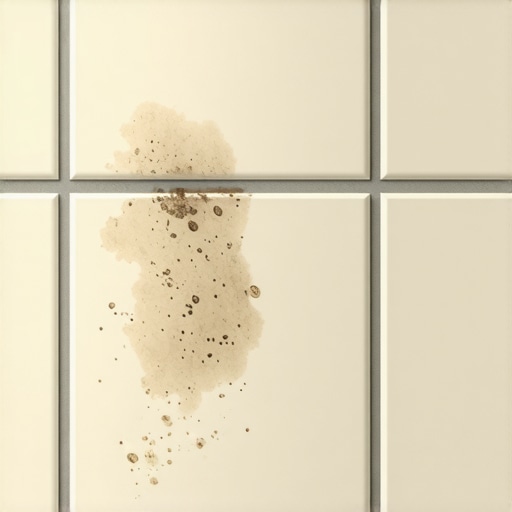
The structural failure hiding behind your tile
Mold growth in a specific shower spot is usually caused by sub-surface moisture entrapment due to an incorrectly sloped pre-slope or a clogged weep hole in the drain assembly. While homeowners assume the issue is topical, it is actually a physics-based drainage failure where water remains stagnant under the tile. This creates a perpetual feeding ground for microbes that migrate through the capillary pores of the grout joints every time the shower is used. I spent three days grinding concrete on a job last month just so the floor wouldn’t click like a castanet. That is the kind of work homeowners never see. They see the marble. They see the expensive tile. They do not see the hours spent checking the moisture levels or the slope. But if you skip that, the marble will crack and the mold will bloom within a year. Shower mold works the same way. It is not about how hard you scrub. It is about how the water moves when you are finished scrubbing. I have walked into hundreds of bathrooms where the owner is frustrated because they use bleach every Sunday. The mold comes back by Wednesday. That is because the mold is not just on the surface. It is living in a saturated mortar bed three inches deep. It is a biological factory powered by poor engineering. We are going to look at why this happens and why your installer likely cut the one corner that mattered. Flooring is not a decoration. It is a performance surface. When you treat a shower like a piece of art instead of a plumbing fixture, you get a moldy mess that eventually rots your floor joists. [IMAGE_PLACEHOLDER]
Why your shower pan is actually a stagnant pond
Stagnant water beneath tile occurs when the waterproof liner sits on a flat subfloor instead of a pre-sloped mortar bed as required by code. This results in hydrostatic pressure that prevents the mud bed from ever fully drying out, leading to anaerobic bacteria growth. The industry calls this the sandwich technique, and it is the primary reason for failure in traditional shower builds. Most guys think the water just hits the tile and goes down the drain. It does not. Tile and grout are not waterproof. They are water-resistant. A significant percentage of water moves through the grout and into the substrate. If that substrate is flat, the water stays there. It gets slimy. It gets dark. Then it finds the weakest point in your grout to push back out. This is why the mold is always in the same spot. It is the lowest point of the dip where the water is pooling. You can scrub until your fingers bleed, but you are not touching the source. The source is under the tile. It is a physics problem, not a cleaning problem. You have to understand how water wicks through portland cement. It is like a sponge. Once that sponge is saturated, it stays saturated for weeks. If you shower every morning, that sponge never has a chance to breathe. This is especially true in houses with high humidity or poor ventilation.
“The mortar bed should be sloped at a minimum of one-quarter inch per foot toward the drain.” – Tile Council of North America Handbook
The chemical reality of grout and moisture
Grout is a porous material composed of portland cement and sand which contains interconnected microscopic voids that facilitate capillary action and moisture migration. When these capillaries are filled with water and organic nutrients like soap scum, they become conduits for mold. The molecular structure of grout is designed to be rigid, not impermeable. Even when you use a sealer, you are only slowing down the absorption rate. You are not stopping it. Over time, the surfactants in your shampoo break down the sealer. Then the water gets in. Once the water is in, it pulls in skin cells and soap. This is the buffet for mold. It lives in the pores. If you have hardwood floors in the hallway, you know how they react to a spill. They swell. Grout doesn’t swell, but it does act as a highway for moisture to travel from the wet mortar bed up to the surface. It is called wicking. It is the same process that pulls oil up a candle wick. If the bottom of the wick is sitting in a pool of dirty water, the top of the wick will show mold. This is why the spot never goes away. You are cleaning the tip of the iceberg while the base is submerged in a swamp. I have seen guys try to patch grout to fix this. It never works. The new grout just gets pushed out by the pressure of the moisture trapped behind it. You cannot paint over a wet wall, and you cannot grout over a wet pan. It is a fundamental law of construction.
| Grout Type | Porosity Level | Moisture Resistance | Chemical Durability |
|---|---|---|---|
| Standard Cement Grout | High | Low | Moderate |
| High Performance Grout | Medium | High | High |
| Epoxy Grout | Zero | Extreme | Maximum |
Why waterproofing is not the same as drainage
Effective shower waterproofing requires both a moisture barrier and a positive slope to the drain to ensure liquid evacuation. Simply applying a topical membrane like RedGard does not solve the issue if weep holes in the drain are blocked by thin-set mortar. I have seen million dollar homes where the master shower smells like a sewer because the plumber or the tile guy didn’t understand weep holes. Every three-piece drain has little holes at the base. Those are there for a reason. They allow the water that gets under the tile to escape into the plumbing. If your installer was sloppy and covered those holes with mortar, the water is trapped. It sits there and rots. This is where the mold comes from. It is a slow-motion flood happening inside your floor. This is why I am a stickler for the NWFA and TCNA standards. They are not suggestions. They are the rules of physics written down so you don’t rot your house out. If you are building a shower, you need to verify that the pre-slope is there. You need to see the slope before the liner goes down. If the liner is flat on the plywood, fire the contractor. It is that simple. You are paying for a future headache. You can use the most expensive laminate or hardwood floors in the rest of the house, but if your shower fails, the moisture will eventually travel through the subfloor and ruin those too. I have seen wide-plank walnut floors cup because a shower three rooms away was leaking into the crawlspace. Everything is connected. Moisture does not stay where you put it.
“A floor is only as good as the subfloor beneath it; deflection is the enemy of every joint.” – Master Flooring Axiom
The 1/8 inch slope that ruins everything
Precision in floor leveling and slope geometry is the difference between a self-drying shower and a perpetual mold hazard. A deviation of only 1/8 inch can create a low spot that collects water, leading to efflorescence and microbial colonies. Most people think 1/8 of an inch is nothing. In flooring, 1/8 of an inch is a mountain. If your floor has a dip, the water will find it. Gravity is the only constant in this business. If the water cannot get to the drain, it will stay in the dip. Over years, this water dissolves the minerals in the concrete and the grout. It brings them to the surface as a white crusty powder. That is efflorescence. It is a sign that your floor is drowning. If you see that white powder along with the mold, you have a major drainage problem. It means the water is moving through the entire system and carrying minerals with it. This is not something a spray bottle can fix. You have to address the levelness. Sometimes I have to spend days with a grinder and a level just to make sure a bathroom floor is ready for tile. If the subfloor is not flat, the tile will have lippage. If the tile has lippage, it creates little dams that hold water. Every one of those little dams is a place for mold to grow. It is a chain reaction of bad decisions. You want a floor that works. You want a floor that dries. That requires a level of precision that most