
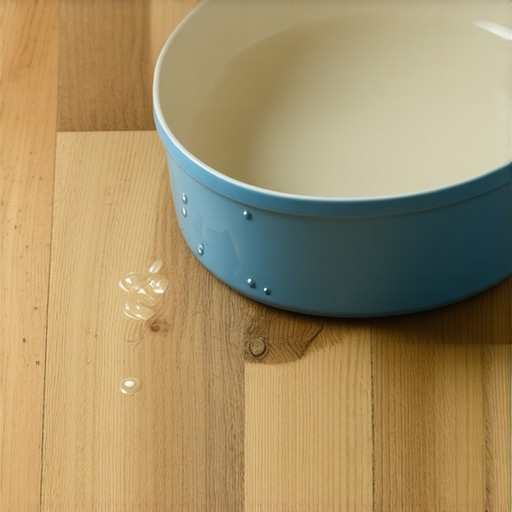
Why Your Dog’s Water Bowl is Destroying Your Laminate Seams
I have spent twenty five years on my knees with a moisture meter and a level. I have seen the heartbreak of a twenty thousand dollar flooring installation ruined by a single overlooked detail. Homeowners always ask why their waterproof vinyl or laminate is buckling. Usually, it is because they locked it under a heavy kitchen island, killing the floor ability to breathe, or they let a dog bowl sit in a pool of standing water for six months. I once walked into a house where a wide plank walnut floor was cupping so bad it looked like a potato chip because the installer did not check the crawlspace humidity. The smell of WD-40 and oak dust follows me home every night, and it tells me one thing. Water always wins if you do not understand the physics of your floor. This is not about aesthetics. This is about structural engineering and the chemical reality of high density fiberboard.
The illusion of waterproof laminate
Waterproof laminate usually refers to the surface overlay and not the structural integrity of the joints. While the melamine wear layer can repel liquid, the tongue and groove locking mechanisms remain vulnerable to capillary action. When water sits under a pet bowl, it travels into the seams, causing the core to swell. Most manufacturers use the term waterproof as a marketing shield. They mean the top is non-porous. They do not mean you can submerge the planks. The core of your laminate is typically High Density Fiberboard, also known as HDF. This is essentially compressed wood fibers held together with resin. While the resin provides some resistance, wood fibers are hygroscopic. They want to drink. When your dog splashes water, that liquid finds the microscopic gap in the clicking mechanism. It does not just sit there. It gets pulled down by surface tension into the thirsty core. Once that HDF absorbs water, it expands. Unlike solid wood which might shrink back, HDF often stays swollen. This is what we call peaking. The edges of the planks push against each other and lift up, creating a ridge that will eventually chip and peel.
“A floor is only as good as the subfloor beneath it; deflection is the enemy of every joint.” – Master Flooring Axiom
The chemistry of fiberboard swelling
The molecular structure of High Density Fiberboard determines how your floor reacts to localized moisture. HDF is composed of wood cellulose fibers bonded with synthetic resins like urea-formaldehyde or melamine-formaldehyde under heat and pressure. When water penetrates these bonds, the cellulose fibers undergo thickness swelling that can exceed twenty percent of the original plank volume. You have to look at the density ratings. A cheap laminate might have a density of 800 kilograms per cubic meter. A premium product might hit 950. The denser the core, the slower the water moves, but it still moves. When your dog bowl leaks, you are creating a micro climate of high humidity. This humidity breaks down the internal bond strength of the resins. I have seen floors where the top looks perfect but the bottom of the plank is a sponge because the homeowner did not use a 6-mil poly film moisture barrier over their concrete slab. The moisture from the dog bowl meets the moisture from the slab and the floor is caught in a pincer movement. [image_placeholder]
Physical properties of laminate cores
| Material Type | Density (kg/m3) | Swelling Rate (24h) | Moisture Resistance |
|---|---|---|---|
| Standard MDF | 600-750 | >15% | Low |
| Standard HDF | 800-900 | <12% | Medium |
| Wax-Impregnated HDF | 900-1000 | <8% | High |
| Solid Plastic (SPC) | 1900-2100 | 0% | Total |
Notice the jump between HDF and SPC. If you have a Great Dane that treats the kitchen like a water park, you should not even be looking at laminate. You need a Stone Plastic Composite. The Janka hardness of the top layer is irrelevant if the core turns into oatmeal. People focus on the AC rating, which measures wear, but the AC rating does not tell you a thing about how the joints handle a puddle.
Why perimeter seals matter more than surface coatings
Perimeter expansion gaps are the lungs of a floating floor, but they are also the primary entry point for liquids that seep under the baseboards. To protect a floor from a dog bowl, you must treat the perimeter with 100 percent silicone sealant to prevent liquid from reaching the raw edges of the planks. I see it on every job. The installer leaves the required quarter inch gap but then just slaps the baseboard over it. If the dog bowl is near the wall, the water runs under the baseboard and hits the unprotected edge of the laminate. That edge is the Achilles heel. It is not coated in melamine. It is raw HDF. One afternoon of a leaking bowl and the floor starts to buckle from the outside in. You need to use a backer rod and silicone in wet areas like kitchens and laundry rooms. This creates a flexible, waterproof dam. It allows the floor to move as the seasons change while keeping the water on top where you can wipe it up.
Essential protection steps for pet owners
- Use a raised silicone mat with a lip under all water bowls to contain spills.
- Apply a joint sealant specifically designed for laminate during the installation process.
- Seal the perimeter of the room with mold-resistant silicone before installing baseboards.
- Maintain a consistent indoor humidity between 35 and 55 percent to prevent joint opening.
- Wipe up any standing water within thirty minutes to prevent capillary travel.
The ghost in the expansion gap
The expansion gap is a physical necessity caused by the thermal expansion coefficient of the flooring materials. Laminate floors expand and contract significantly based on temperature and humidity changes, requiring at least a quarter inch of space at every vertical obstruction. If you do not have that gap, the floor has nowhere to go when it swells from the dog bowl moisture. It will hit the wall and then the only way to go is up. This is why you get that bouncy, hollow sound when you walk. The floor is literally arched off the subfloor. I spent three days grinding concrete on a job last month just so the floor would not click like a castanet because the previous guy did not level the slab to within an eighth of an inch over ten feet. While most people want the thickest underlayment, too much cushion actually causes the locking mechanisms on laminate to snap under pressure. You want a high density underlayment that is thin, usually 2mm to 3mm. Too much squish is the death of a click-lock joint.
“Hardwood floors are a living product; treat them with the respect you would give any other organic material in your home.” – NWFA Technical Guidelines
Physics of the locking mechanism
The geometry of the tongue and groove system is engineered to provide a mechanical lock, but it creates a microscopic trough where water can sit undisturbed. Surface tension allows water to stay in these grooves even after you have wiped the surface, leading to prolonged moisture exposure. Think about the physics. The water is not just sitting on top. It is being pulled in. This is why I tell people to avoid steam mops. A steam mop forces moisture into the joints under pressure. You are literally blasting the HDF core with water vapor. It is the fastest way to kill a floor. Use a damp microfiber cloth and a pH-neutral cleaner. If you can see moisture on the floor after you mop, you used too much water. The goal is evaporation within sixty seconds.
Regional moisture impacts on floating floors
The climate where you live dictates how your floor handles the dog bowl. In the swampy humidity of Houston, solid wood is a death wish for many. You need engineered cores or SPC because the ambient moisture is already pushing the wood to its limit. In those environments, a dog bowl spill is the tipping point that causes total floor failure. Conversely, in the dry heat of Phoenix, the wood fibers will shrink until they show a gap. When those gaps open up, the water from the bowl has a direct highway to the subfloor. You have to understand that your floor is a moving, breathing entity. It is reacting to the air in your house every second of the day. If you do not control your environment, your floor will eventually fail, bowl or no bowl. I always check the calcium chloride levels in the concrete before I even open a box of flooring. If the slab is venting too much moisture, no amount of silicone will save you.