
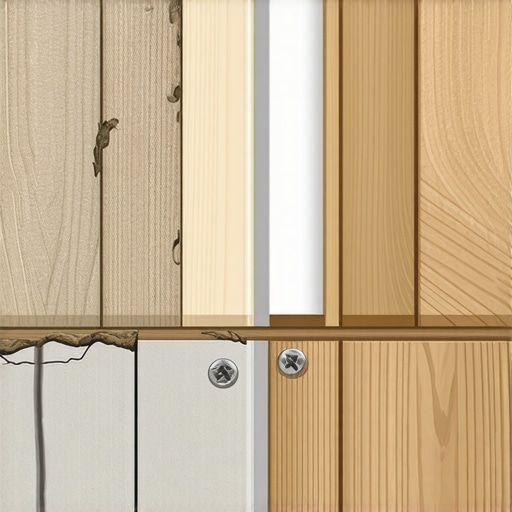
The hidden mechanics of transition strip failure
The smell of oak dust and 40-weight oil follows me home every night. I have spent 25 years fixing the mistakes of guys who think a transition strip is just a piece of trim you slap down at the end of a job. Most guys skip the leveling compound. They think the underlayment will hide the dip. It won’t. I spent three days grinding concrete on a job last month just so the floor wouldn’t click like a castanet. That job is a prime example of why your transition strips are snapping their screws. A transition strip is a structural bridge. When you treat it like a cosmetic cover, you are inviting mechanical failure. I have seen fifteen thousand dollar wide-plank hardwood floors ruined because the transition was an afterthought. The problem starts beneath the surface. It begins with the physics of the subfloor and the chemistry of the fasteners you are using.
The mechanical failure of the T-molding screw
Transition strips break at the screws because of subfloor deflection, improper expansion gaps, and lateral shear forces. When a floor is not level, the molding acts as a bridge across a valley. Stepping on it creates a lever action that snaps the screw head or strips the threads from the subfloor. This is not just a nuisance. It is a sign of a deeper structural issue. Most installers use the cheap zinc screws that come in the package. Those screws have the structural integrity of a wet noodle. When you walk across a floor, you are applying hundreds of pounds of pressure. If that pressure is concentrated on a single screw head through a hollow gap, the metal will reach its fatigue limit and fail. You need to understand the metallurgy of the fasteners. Stainless steel or case-hardened steel screws are required for any high-traffic area. The zinc screws found in big-box stores are prone to hydrogen embrittlement. They snap at the slightest hint of lateral movement.
“A floor is only as good as the subfloor beneath it; deflection is the enemy of every joint.” – Master Flooring Axiom
Why your subfloor is lying to you
A subfloor that looks flat is rarely level enough for a stable transition without intervention. Small dips cause the transition strip to bounce, putting constant cyclical stress on the fasteners. This fatigue eventually leads to metal failure or wood fiber pull-out in the substrate below. I have seen concrete slabs that look like the surface of the moon once you pull up the carpet. If you do not grind those high spots or fill the low spots with a high-compressive-strength leveling compound, your transition strip is doomed. The industry standard is 3/16ths of an inch over 10 feet. If you are off by more than that, the vertical movement of the floor will act as a hammer against the screw. Every step is a strike. Over time, that strike widens the hole in the wood or snaps the neck of the screw. You are fighting the laws of physics and the physics of mass and velocity. You cannot win that fight with a one-inch screw and a prayer.
The expansion gap paradox
Floor transition strips must have adequate space for the flooring material to expand and contract without touching the screw or the track. When a floor expands due to humidity, it pushes against the transition strip with thousands of pounds of force. If the floor is tight against the screw, it will shear the fastener clean off. This is especially true for laminate and hardwood floors. Wood is a hygroscopic material. It breathes. It moves. In the summer heat of a place like Florida, a solid oak floor can expand by a significant margin. If you have not left a quarter-inch gap on either side of the transition track, the floor becomes a battering ram. It hits the screw. The screw has nowhere to go. It snaps. This is why we see so many failures in the transition from a living room to a kitchen. The different materials expand at different rates. The kitchen tile is stable, but the living room laminate is a moving target. You have to account for that differential movement.
The physics of lateral shear force
Lateral shear force occurs when the flooring material moves horizontally and puts direct pressure on the vertical shaft of the screw. This is the primary cause of screw heads popping off in high-traffic doorways. Think about the way you walk. You don’t just step down. You push off. That horizontal force is transferred from your foot to the floor and then to the transition strip. If the transition strip is not glued down with a high-quality construction adhesive in addition to the screws, the screws take 100 percent of that load. I always use a polyurethane-based adhesive. It remains flexible enough to handle the vibration but strong enough to take the shear load off the fastener. If you are relying on screws alone, you are asking a small piece of metal to hold back the weight of a human being in motion. It is a losing game.
| Fastener Type | Shear Strength (lbs) | Best Use Case | Failure Risk |
|---|---|---|---|
| Zinc Big Box Screw | 150 | Decorative trim only | Very High |
| Stainless Steel #6 | 350 | General hardwood use | Low |
| Case Hardened Steel | 500+ | Commercial transitions | Minimal |
| Plastic Concrete Anchor | 80 | Lightweight LVP | Extreme |
Regional humidity impacts on fastener retention
High humidity environments like the coastal South soften wood subfloors and cause screws to pull out rather than snap. In a dry climate like Phoenix, the wood becomes brittle and the screws are more likely to snap because the wood won’t give. You have to know where you are working. In a humid crawlspace environment, the moisture content of the subfloor can reach 14 percent or higher. At that point, the wood fibers lose their grip on the screw threads. The transition strip starts to wobble. Once it wobbles, the mechanical advantage is lost. In dry climates, the wood shrinks and the screw hole becomes oversized. I often see installers try to fix this by using a bigger screw. That just splits the wood. The real fix is to stabilize the environment or use an epoxy-set anchor. You have to respect the climate. You cannot install a floor in a swamp the same way you install one in a desert.
“Subfloor preparation is 90 percent of the job; the remaining 10 percent is just showing off.” – Master Flooring Axiom
Transitioning to wet areas and grout stability
When transitioning to showers or tiled areas, the transition strip must protect the grout line from the movement of the adjacent floor. If the transition strip is loose, it will vibrate. That vibration will crack the grout in your bathroom or kitchen. I have seen beautiful tile jobs ruined because the transition from the hardwood floors was not secure. The grout is a rigid material. It does not like movement. If your transition strip is bouncing, it is acting like a chisel against the edge of the tile. You need to ensure the subfloor under the tile meets the L/720 deflection standard. If you are going from a flexible laminate to a rigid tile, the transition strip is the only thing standing between a perfect floor and a cracked mess. You must use a heavy-duty transition and ensure it is anchored into the concrete or the joist, not just the subfloor plywood.
The Master Fix Checklist
- Verify subfloor flatness to within 3/16ths of an inch over a 10-foot radius.
- Clean the expansion channel of all sawdust and debris to allow for movement.
- Use stainless steel screws with a minimum length of 1.5 inches.
- Apply a bead of flexible polyurethane adhesive to the underside of the transition track.
- Pre-drill all holes to prevent splitting the subfloor or the molding.
- Ensure a minimum 1/4 inch gap between the flooring and the center of the track.
- Check the moisture content of the wood subfloor before choosing your fastener.
The next time you see a transition strip with a popped screw, don’t just reach for the screwdriver. Look at the floor. Is it cupping? Is there a dip? Is the floor tight against the screw? If you don’t fix the underlying physics, you’ll be back there in six months doing the same thing. I have built my reputation on floors that stay put. I don’t get callbacks because I don’t take shortcuts. I grind the concrete. I check the humidity. I use the right steel. If you want a floor that lasts, you have to think like an engineer and work like a mechanic. Your transition strips are the most stressed part of your floor. Treat them with the respect they deserve and they will stop breaking. Stop buying the cheap stuff and start doing the prep work. That is the only secret to a floor that doesn’t fail.