
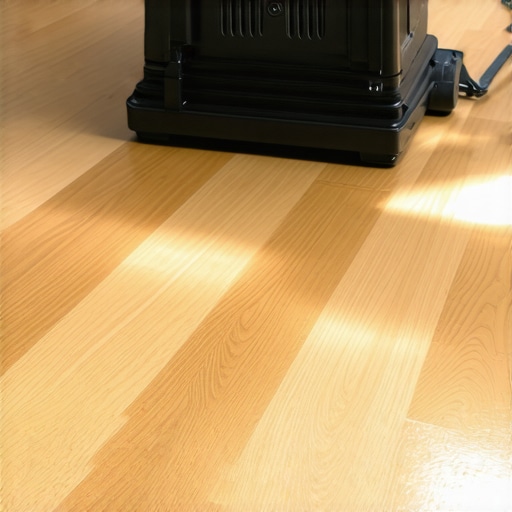
I smell like oak dust and the solvent-based polyurethane I applied yesterday. My knees are a wreck, but that is the price you pay for twenty-five years of staring at subfloors and checking moisture levels. I have seen the same story play out a thousand times. A homeowner spends a fortune on solid white oak, treats it like a museum piece for six months, and then wonders why it looks like a beat-up gym floor three years later. I once walked into a house where a $15,000 wide-plank walnut floor was cupping so bad it looked like a potato chip because the installer did not check the crawlspace humidity. People think wood is a static object. It is not. It is a breathing, moving, chemical structure that is constantly under attack from gravity and grit. When you walk across your floor, you are essentially rubbing sandpaper into the top layer of your finish. This is where the screen and re-coat process comes into play. It is the only way to save your floor from a full, expensive, and messy sanding job down the road.
The science of surface tension and polyurethane bonds
Screening and re-coating is a maintenance procedure where the top layer of polyurethane is lightly abraded using a buffer and a mesh screen to create a mechanical bond for a fresh coat of finish. This process does not involve sanding the actual wood. It focuses entirely on the sacrificial wear layer that protects the cellular structure of the timber from moisture and abrasion. When we talk about a screen and re-coat, we are talking about maintaining the integrity of the finish before the wood is exposed. Most residential floors use either water-borne or oil-modified polyurethanes. Over time, these finishes develop microscopic scratches. These scratches are not just an aesthetic problem. They are entry points for moisture and household chemicals. If you wait until the finish is gone and you are walking on raw wood, it is too late for a screen and re-coat. You are now in the territory of a full sand and finish, which involves taking off 1/32 of an inch of the wood itself. A screen and re-coat is the preventative medicine that keeps your floor from the surgical table.
“A floor is only as good as the subfloor beneath it; deflection is the enemy of every joint.” – Master Flooring Axiom
The ghost in the expansion gap
Wood movement and seasonal expansion are the primary reasons why your polyurethane finish begins to crack at the tongue and groove joints over several years. Hardwood floors are hygroscopic. They absorb and release moisture based on the ambient humidity of your home. Even if you have a top-tier HVAC system, the wood will swell in the summer and shrink in the winter. This constant movement puts stress on the finish. A brittle finish will develop micro-fissures at the seams. These fissures allow dirt and oils to penetrate deep into the grain. When I perform a screen and re-coat, I am essentially sealing these micro-fissures with a fresh, elastic layer of poly that can handle the seasonal shifts. If you live in a high-humidity area, this is even more vital. Without that fresh seal, moisture from the air can seep into the edges of the planks, causing the finish to peel away from the wood. This is common in homes where owners think they can treat wood like tile or laminate. It is a different beast entirely.
The difference between wood and laminate
Laminate flooring is a photographic image of wood glued to a high-density fiberboard core, whereas hardwood floors are solid or engineered organic materials that require a chemical or mechanical bond to maintain their surface. You cannot screen and re-coat laminate. Once the wear layer on laminate is gone, the floor is trash. Hardwood is the opposite. It is a legacy product. By screening the floor, we are using 120-grit or 150-grit mesh screens to scuff the surface. This creates a profile. Think of it like painting a wall. You do not just slap paint on a glossy surface. You sand it so the new paint has something to grab onto. In the flooring world, we call this the mechanical bond. If I were to just pour new poly on a dirty, unscuffed floor, it would peel off in sheets within a week. That is a failure of the bond, and it usually happens because someone was too lazy to run the buffer properly.
| Feature | Solid Hardwood | Engineered Wood | Laminate |
|---|---|---|---|
| Core Material | Solid Timber | Plywood Layers | HDF Fiberboard |
| Maintenance Type | Screen/Sandable | Screen/Sandable | Replacement Only |
| Janka Rating | 660 to 3000+ | Varies by Top Layer | N/A |
| Acclimation Time | 7 to 14 Days | 3 to 5 Days | 48 Hours |
| Water Resistance | Low | Moderate | Varies |
Why your subfloor is lying to you
Subfloor moisture is the hidden killer of hardwood floor finishes, often migrating through the wood planks and causing the polyurethane to delaminate from the bottom up. Even if the surface looks fine, the chemistry underneath might be failing. I have seen guys install 3/4 inch oak over a damp concrete slab without a proper moisture barrier. Six months later, the finish is cloudy. That cloudiness is moisture trapped between the wood and the poly. You cannot fix that with a screen and re-coat. You have to rip it out. But if your subfloor is dry and stable, the main enemy is surface wear. Most homeowners do not realize that the oils from their skin, the cleaners they use, and even the hairspray from their bathrooms act as contaminants. If you do not screen the floor, these contaminants will prevent the new finish from sticking. This is why we use a chemical tacking process after screening to ensure every microscopic particle of dust is gone before the finish goes down.
The 1/8 inch that ruins everything
Expansion gaps at the perimeter of a hardwood installation must be at least 1/2 inch to 3/4 inch to prevent the wood planks from buckling and cracking the finish. If your installer cut the wood too tight to the wall, the floor has nowhere to go when it expands. It will peak at the joints. When the joints peak, the buffer cannot hit the floor evenly. You will get spots where the screen digs in too deep and spots where it does not touch at all. This results in an uneven finish that looks terrible when the light hits it. I always tell clients that if they see their baseboards moving or gaps appearing, it is time to call a pro. Do not wait for the finish to start flaking off like a bad sunburn. If you can see the gray, weathered wood, the