
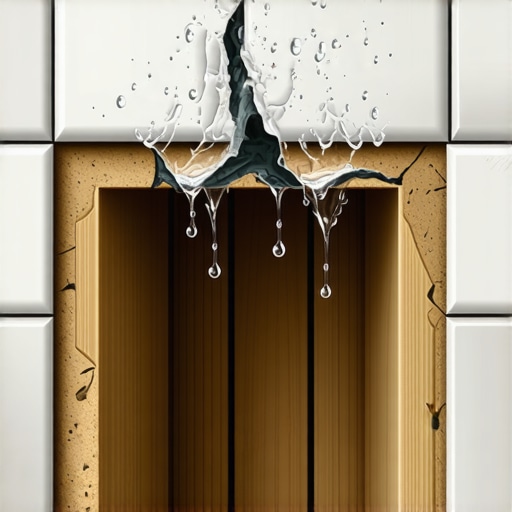
I spent three days grinding concrete on a job last month just so the floor wouldn’t click like a castanet because the previous installer thought a thick underlayment would hide a massive dip in the slab. It did not. That same reckless attitude toward structural physics is why your shower bench is currently rotting out your subfloor and potentially ruining the hardwood floors in the adjacent hallway. Most guys skip the leveling compound and they definitely skip the pre-slope on a bench. They think the tile and the grout are the waterproof layer. They are dead wrong. I have seen fifteen thousand dollar bathrooms reduced to moldy kindling because someone forgot that water is a persistent chemist. It finds the path of least resistance through every microscopic void in your cement board. When I walk onto a site and smell that damp, earthy rot, I know exactly where the failure started. It started with a lack of respect for the Tile Council of North America standards and a misunderstanding of how moisture moves through porous solids.
The invisible geometry of a shower failure
A leaking shower bench occurs when water penetrates the grout and thin-set, reaches the framing through unsealed screw penetrations, or pools due to improper slope. The primary failure point is often the lack of a continuous waterproof membrane or a missing pre-slope that allows gravitational water migration into the wall cavity rather than the drain. The physics of a shower bench are more complex than a standard wall. You have a horizontal surface meeting two vertical planes. In the world of fluid dynamics, these corners are high-stress zones. If the bench is perfectly level, water sits. If it is pitched backward toward the wall, you have created a permanent reservoir. Water does not just evaporate; it wicks. Capillary action pulls that moisture upward through the thin-set behind your wall tiles. From there, it hits the wooden studs. Wood is a sponge. Once those studs reach a moisture content above 20 percent, the fungal spores activate. You won’t see it for a year, but the structural integrity of your home is being eaten from the inside out.
“A floor is only as good as the subfloor beneath it; deflection is the enemy of every joint.” – Master Flooring Axiom
The chemistry of grout and the myth of waterproof tile
Grout is a porous mineral matrix that functions as a filter rather than a barrier. Standard cementitious grout allows water molecules to pass through its crystalline structure via capillary suction. Without a topical waterproof membrane like a liquid-applied elastomer or a bonded fleece sheet, the substrate beneath the tile will inevitably become saturated during every shower cycle. Many homeowners believe that because tile is hard and glazed, the surface is waterproof. This is a dangerous fallacy. The grout lines are the weak links in the armor. Even if you seal your grout, those sealers are temporary and break down under the alkalinity of soap and the acidity of body oils. When water gets behind the tile, it encounters the thin-set. Modified thin-set contains polymers to increase bond strength, but it is not a water barrier. In fact, thin-set can hold water against the bench framing for days. If your installer used a traditional mud bed without a secondary waterproofing layer on top, you are relying on a water-in water-out system that rarely works for benches. The water goes in, but because the bench lacks a weep system like a shower pan, the water never goes out.
| Waterproofing Method | Permeability Rating | Installation Complexity | Drying/Cure Time |
|---|---|---|---|
| Liquid Elastomeric Membrane | Low | Moderate (Requires multiple coats) | 12 to 24 hours |
| Sheet Membrane (Bonded Fleece) | Very Low | High (Critical seam management) | Immediate for tile |
| Traditional Lead/PVC Pan | Zero (at base) | Extreme | N/A |
| Unmodified Cement Board Only | Extremely High | Low (Insufficient for showers) | N/A |
The ghost in the expansion gap
The transition between a shower curb and the exterior flooring requires a dedicated expansion gap to prevent structural movement from cracking the waterproof seal. If the shower bench leaks, the moisture travels along the subfloor, causing nearby hardwood floors to cup or laminate flooring to swell at the edges. I have seen gorgeous white oak planks curl like potato chips ten feet away from a shower. The homeowners blamed the wood supplier. The real culprit was the shower bench. When the plywood subfloor absorbs moisture from a leaking bench, it expands. This expansion exerts lateral pressure on the entire flooring assembly. If you are in a high-humidity environment like New Orleans or Houston, this problem is magnified. The ambient humidity prevents the subfloor from ever drying out, leading to a permanent state of rot. You need a 1/8 inch gap at every vertical transition, but that gap must be filled with a 100 percent silicone sealant, not grout. Grout is rigid. It will crack the moment the house settles or the wood expands. Once that crack forms, you have an open door for water.
The 1/8 inch that ruins everything
A shower bench must have a minimum pitch of 1/4 inch per foot toward the drain to ensure positive drainage. When an installer fails to provide this slope, water remains trapped against the wall-to-bench transition, eventually bypassing the caulk and attacking the waterproofing membrane at its most vulnerable point. Precision is the difference between a thirty-year shower and a three-year disaster. I use a digital level on every bench I build. If I see 0.0 degrees, I tear it out. You need that slight incline. Think about the molecular tension of water. It wants to stick to surfaces. Without a significant slope, the surface tension of the water allows it to