
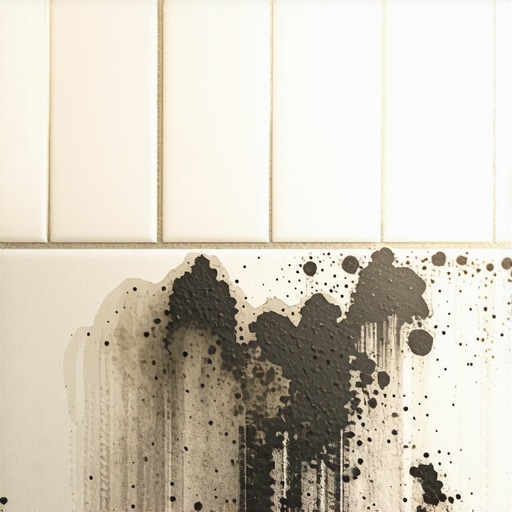
The persistent smell of mildew in a clean shower usually stems from moisture trapped beneath the tile surface in the mortar bed or subfloor. When waterproofing membranes are absent or improperly installed, porous grout allows water to saturate the structural layers. This creates a hidden breeding ground for mold that surface scrubbing cannot reach.
The invisible rot behind the tile
You spent four hours on your knees with a toothbrush and bleach. The grout looks white. The glass sparkles. Yet, the moment you step into the bathroom the next morning, that damp, earthy stench hits you like a wet wool blanket. It is frustrating. It is also a sign that your floor assembly has failed. Deep cleaning is a surface-level ritual. It does not touch the microbial colony thriving in the saturated mortar bed or the rotting plywood subfloor beneath your tile. Most homeowners think tile and grout are waterproof. They are not. They are porous filters that allow water to migrate into the structural guts of your home. I have seen this a thousand times. A client calls me because their floor feels soft near the shower, but they swear they clean it every day. I pull up one tile and the smell of fermented wood and stagnant water fills the room. That is the reality of a failed drainage plane. If the water has nowhere to go once it passes through the grout, it sits on the subfloor. It creates a anaerobic environment where mold thrives. You can pour all the bleach you want on the surface, but you are just washing the roof of a burning house. The fire is in the basement. [IMAGE_PLACEHOLDER]
Why your subfloor is lying to you
Most guys skip the leveling compound. They think the underlayment will hide the dip. It won’t. I spent three days grinding concrete on a job last month just so the floor wouldn’t click like a castanet. That same shortcut is why your shower smells. If the subfloor isn’t sloped to the drain perfectly, water pools in the low spots under the tile. It sits there. It stagnates. It breeds. I remember a job in a high-end condo where the installer used a standard cement board but forgot to tape the seams with alkali-resistant mesh. He figured the thin-set would hold it. Within six months, the moisture had wicked through those seams and started rotting the 3/4 inch OSB beneath. The smell was unbearable. The owner thought it was a plumbing leak. It wasn’t. It was the physics of moisture migration. When I finally cut into the floor, the OSB was the consistency of wet oatmeal. It smelled like a swamp. This is why I am a stickler for the NWFA and TCNA standards. They aren’t suggestions. They are the laws of physics written down so you don’t rot your house from the inside out.
“A floor is only as good as the subfloor beneath it; deflection is the enemy of every joint.” – Master Flooring Axiom
The physics of capillary action in grout
Grout is essentially a hard sponge. At a molecular level, it is a network of interconnected voids that pull water in through capillary action. When you shower, the water does not just run off the tile and down the drain. A significant percentage of it is absorbed by the grout lines. In a properly built shower, this water hits a waterproofing membrane, like a topical liquid-applied product or a bonded sheet membrane, and then eventually evaporates or finds its way to a secondary weep hole in the drain. If that membrane is missing, the water is absorbed by the mortar bed. This is where the “mud bed” style of installation often fails in modern homes. Old-school installers used a thick bed of dry-pack mortar over a sloped lead or PVC liner. This worked because the bed was thick enough to hold moisture while it evaporated. Modern thin-bed installations do not have that luxury. If you are using a standard thin-set over plywood with just a layer of cement board, you are inviting disaster. The water wicks through the grout, saturates the cement board, and then sits against the plywood. Plywood is food for mold. Add a little warmth from your morning shower and you have a perfect incubator. The smell is the byproduct of the mold consuming your subfloor. This is why I always recommend epoxy grout for high-moisture areas. It is non-porous. It does not absorb water. It is harder to install and costs more, but it stops the cycle of saturation.
The moisture migration trap in hardwood floors
If your bathroom is adjacent to hardwood floors, the mildew smell might not even be coming from the shower itself. It could be the transition. Hardwood floors and moisture are natural enemies. I have walked into houses where a $15,000 wide-plank walnut floor was cupping so bad it looked like a potato chip because the installer didn’t check the crawlspace humidity or the proximity to the wet room. Water from the shower splashes onto the floor, or people step out with wet feet. That water finds the expansion gap at the edge of the tile transition. It seeps under the hardwood. Because the hardwood is finished on top with polyurethane, the water cannot evaporate upward. It stays trapped in the wood fibers and the subfloor. This causes the wood to swell and cup. More importantly, it creates a hidden pocket of moisture that never dries out. In humid regions like Houston or Florida, this is a death sentence for a floor. The humidity in the air prevents any natural drying. You end up with a permanent smell of mildew that seems to come from the walls. You need to maintain a strict 1/8 inch expansion gap, but it must be filled with a high-quality, flexible 100% silicone sealant, not grout. Grout will crack at the transition, creating a highway for water to reach your joists.
| Material Type | Porosity Rating | Recommended Sealer | Typical Lifespan |
|---|---|---|---|
| Sanded Grout | High | Penetrating Solvent | 5 Years |
| Epoxy Grout | Negligible | None Required | 25 Years |
| Porcelain Tile | Under 0.5% | None Required | 50 Years |
| Hardwood Oak | High | Polyurethane | 20 Years |
| Laminate Core | Extreme | None (Avoid Water) | 10 Years |
The 1/8 inch that ruins everything
Precision is not about being picky. It is about survival. A floor needs to breathe and move. If you tight-butt your tile against a wall or a tub without an expansion gap, the pressure will eventually cause the grout to micro-fracture. These cracks are often invisible to the naked eye. However, they are large enough for water molecules to pass through. Once that water is under the tile, it is trapped. I have seen laminate floors in bathrooms where the homeowner was told the product was “waterproof.” There is no such thing as waterproof laminate. The top wear layer might be impervious to water, but the joints are the weak point. If water sits on a laminate joint for more than thirty minutes, it wicks into the HDF core. The core swells. The edges peak. Now you have a jagged edge that catches dirt and more water. The smell of rotting sawdust is distinct. It is sharper than the earthy smell of moldy concrete. If you have laminate near your shower and you smell mildew, the floor is likely toast. You cannot dry out a saturated laminate core. You have to rip it out and start over. This is why I tell people to stop buying the discount big-box store specials. They are engineered to fail in real-world conditions.
“Liquid-applied waterproofing membranes must achieve a continuous, crack-bridging film thickness to prevent subfloor saturation.” – TCNA Handbook Standards
Practical solutions for a permanent fix
If you have already deep cleaned and the smell persists, you need to take action. First, check the moisture levels with a non-invasive moisture meter. If the meter spikes when you place it on the grout, you have a saturated assembly. If the readings are normal, the smell might be coming from the p-trap or a failing wax ring on the toilet. But if the floor is wet, you have three options. You can try to dry it out with a commercial dehumidifier and high-velocity fans for several days. This rarely works if the mold has already taken hold. You can grind out the old grout and replace it with epoxy grout to seal the floor, but this only traps the existing moisture inside. The final, and only guaranteed solution, is a full teardown. You have to remove the tile, inspect the subfloor for structural damage, and install a proper waterproofing system. This is the part people hate to hear. They want a magic spray. There is no spray that can reach through three inches of mortar and kill a mold colony. You have to be aggressive. You have to be the architect of your own solution.
Proper waterproofing checklist
- Install a pre-slope under the liner to ensure water moves toward the weep holes.
- Use a topical waterproofing membrane like Kerdi or RedGard over the cement board.
- Ensure all transitions between the floor and wall are sealed with flexible silicone.
- Maintain bathroom humidity below 50 percent using a high-CFM exhaust fan.
- Seal all porous grout lines every six months if not using epoxy.
- Check the crawlspace or basement for signs of water leaking through the subfloor.
Final inspection
Your floor is a performance surface. It is a complex assembly of chemistry and structural engineering. When it smells, it is communicating a failure. Do not ignore it. Do not try to mask it with scented candles. Inspect the grout. Check the subfloor. If you find that the moisture has moved beyond the surface, be prepared to do the hard work. A dry floor is a healthy floor. Anything less is just a slow-motion demolition of your home’s integrity. Stick to the standards. Watch the moisture levels. Keep your sawdust dry and your thin-set properly mixed. That is the only way to win the war against mildew.