
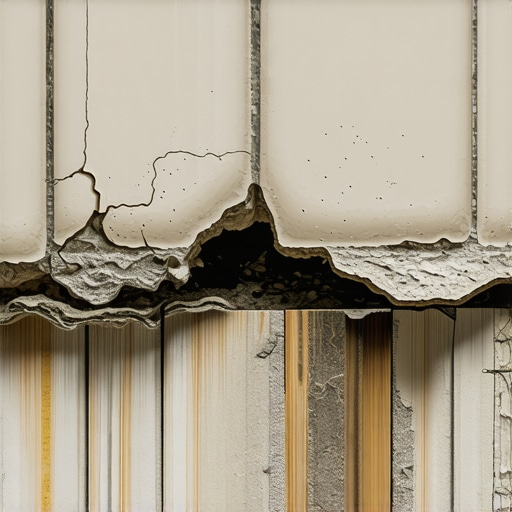
I have spent twenty-five years on my knees looking at what people hide under their tiles. Most of it is ugly. I once walked into a house where a custom shower looked like a palace on the outside. The tile was expensive Carrara marble. The grout lines were tight. But when I stepped on the curb, the whole thing compressed like a wet sponge. The homeowner thought they had a leak in the copper plumbing. They did not. They had a failure of basic physics. I spent the next three days tearing out that palace and found three moldy 2x4s that looked like they had been pulled from the bottom of a swamp. The installer had built a wooden core and wrapped it in plastic like a burrito, trapping moisture instead of shedding it. This is why your shower curb is failing. It is not about the tile. It is about the chemistry of the subfloor and the hubris of the installer.
The structural lie of the wooden core
The primary reason a shower curb rots is the use of wood 2x4s as the internal structure combined with a failure to create a continuous waterproof seal. Water penetrates the grout and is absorbed by the wood through capillary action, leading to fungal growth and structural collapse. Wood is a living, breathing material that expands and contracts. Cement and tile do not. When you build a curb out of wood, you are inviting two materials with different expansion coefficients to fight each other. The wood eventually wins. It swells when it gets wet. It pushes against the mortar. It cracks the grout. Then more water gets in. It is a cycle of destruction that starts the first time you turn on the water. I have seen guys try to save ten dollars by using scrap lumber for a curb. They end up costing the homeowner ten thousand in mold remediation. If you want a curb that lasts, you use pre-formed high-density foam or solid masonry. Wood has no business inside a wet area.
Why grout is basically a hard sponge
Grout is a cementitious product that is naturally porous and allows water to pass through it at a molecular level via capillary action. Without a functional waterproofing membrane directly behind the tile, the water stays trapped against the substrate where it cannot evaporate. Most people think grout is like a rubber gasket. It is not. It is more like a very hard filter. Water moves through the micro-pores of the cement. If the curb is not sloped back toward the drain, that water sits. It dwells. It finds the tiny pinholes in your silicone. Once it hits the wooden framing, the wood acts like a wick. It draws that moisture deep into the floor joists. You see the mold on the baseboard outside the shower, but the rot started twelve inches inside the curb three months ago. This is why I tell people to stop trusting ‘sealer’ to do the job of proper engineering. Sealer is a temporary barrier. Proper slope is a permanent solution.
The physics of capillary rise in your bathroom
Capillary rise occurs when the surface tension of water pulls it into the narrow spaces between the tile and the substrate, often climbing upward against gravity. In a shower curb, this means water can travel up and over the waterproofing liner if the liner is not properly integrated. This is the hidden killer. You might have a liner, but if you poked holes in it to nail your cement board, you have created a highway for moisture. Every nail hole is a leak. Every staple is a failure point. Water hits the floor, finds the grout line, and then uses the backer board as a ladder. It climbs up the side of the curb and finds the top of the 2×4. Once the wood reaches a moisture content above 20 percent, the wood-decay fungi begin to feast. They turn the cellulose into mush. You cannot stop this with a bit of extra caulk. You stop it by understanding how water behaves at a microscopic level. [image_shower_curb_cross_section]
“A floor is only as good as the subfloor beneath it; deflection is the enemy of every joint.” – Master Flooring Axiom
Laminate in the bathroom is a marketing scam
Installing laminate in a bathroom or near a shower curb is a recipe for catastrophic failure because the fiberboard core cannot handle the humidity and direct water contact common in these areas. Even products labeled as waterproof are only protected from the top down, not from the bottom up. I see this too often. A homeowner buys a box of ‘waterproof’ laminate and thinks they can run it right up to the shower. The problem is the edges. If the shower curb is leaking even a teaspoon of water a week, that laminate core will drink it. The edges will swell. The wear layer will peel. Within six months, the floor feels soft. Laminate is made of sawdust and glue. Water is the universal solvent. You do the math. If you want the look of wood near your shower, you go with a high-quality luxury vinyl plank that is truly inorganic, or you go with a porcelain tile that mimics wood grain. Anything else is a gamble you will lose.
Hardwood flooring and the humidity trap
Hardwood floors near wet areas suffer from hygroscopic expansion where the wood fibers absorb moisture from the air and the subfloor, leading to cupping and crowning. In a bathroom environment, the high humidity levels are often enough to ruin a solid oak floor even without a direct leak. I have walked into jobs where a $15,000 wide-plank walnut floor was cupping so bad it looked like a potato chip. The installer didn’t check the crawlspace humidity and didn’t account for the shower steam. Wood is always trying to reach equilibrium with its environment. In a bathroom, that equilibrium is ‘soggy.’ If your shower curb is rotting, it is dumping gallons of water into the subfloor. That water moves laterally. It gets under the hardwood in the hallway. Suddenly your hallway floor is buckling and you have no idea why. It is all connected. The floor is a system, not a collection of separate parts.
The chemistry of modified thin set
Modified thin-set mortars contain liquid or powdered polymers that increase the bond strength and provide a degree of flexibility to the cured cement. This polymer bridge is what allows tile to stay bonded to a membrane despite the thermal expansion of the shower floor. When you mix thin-set, you are triggering a chemical reaction. The Portland cement starts to form a crystalline structure. The polymers fill the gaps in that structure. If you use the wrong thin-set over a waterproof membrane, it won’t cure correctly. It needs air to dry, but the membrane is a vapor barrier. This is the ‘sandwich’ problem. If you use a traditional unmodified thin-set between two non-porous layers, it stays wet for weeks. It never reaches its full compressive strength. You step on the tile, the bond breaks, and water finds a new way in. You need to match the adhesive chemistry to the membrane physics. It is not just mud. It is engineering.
| Material Type | Moisture Absorption Rate | Recommended Use |
|---|---|---|
| Porcelain Tile | < 0.5% | Shower floors and curbs |
| Ceramic Tile | 3.0% – 7.0% | Walls only |
| Natural Marble | 0.5% – 2.0% | Requires frequent sealing |
| Laminate Core | > 12% | Dry areas only |
The 1/8 inch slope that saves your subfloor
Every horizontal surface in a shower must have a minimum slope of 1/4 inch per foot toward the drain to ensure positive drainage and prevent standing water. For a shower curb, a slight inward pitch of 1/8 to 1/4 inch is the difference between a dry floor and a rotted house. Most guys just level the curb. Level is the enemy. Level means the water stays there. It pools. It finds the grout. It goes down. If you pitch the curb toward the drain, gravity does the work for you. The water runs off the tile and into the pan. This is flooring 101, yet I see it missed on half the inspections I do. People are so worried about the tile being straight they forget that the water doesn’t care about your laser line. Water only cares about the path of least resistance. Make sure that path leads to the drain, not your subfloor. This is the fundamental rule of the TCNA handbook. You ignore it at your own peril.
“Success in tile installation is determined by the management of moisture movement and the structural integrity of the substrate.” – TCNA Handbook Wisdom
Moisture meters do not lie but installers do
Professional flooring installers must use a pin-less moisture meter to check the saturation levels of the subfloor and the curb core before and after installation. A reading above 12 percent in a wooden substrate is an immediate red flag that the area is not ready for tile. I carry a moisture meter in my pocket like a gunslinger. I’ve had installers tell me ‘it’s dry enough’ while the meter is screaming at 25 percent. You cannot guess. You cannot feel it with your hand. By the time you can feel the moisture, the damage is already permanent. If you are hiring someone to fix your shower, ask to see their moisture meter. If they don’t have one, send them home. They are guessing with your biggest asset. You are looking for a bone-dry substrate before any membrane is applied. If you trap moisture under a membrane, you are just making a petri dish for black mold.
The curb repair checklist
- Remove all tile and backer board from the curb down to the subfloor.
- Inspect the wooden framing for any signs of dark staining or soft spots.
- Replace rotted 2x4s with solid masonry blocks or high-density foam curbs.
- Ensure the subfloor is level and the curb has an inward pitch toward the drain.
- Apply a continuous waterproof membrane that overlaps the shower pan liner.
- Perform a 24-hour flood test to verify the integrity of the new curb.
- Use a high-quality modified thin-set specifically rated for your membrane.
- Seal all grout lines and silicone all change-of-plane joints.
The reality of a rotted shower curb is that it is a symptom of a larger problem. It is a lack of respect for the power of water. You can spend all the money you want on beautiful stone and designer fixtures, but if you do not respect the physics of the curb, it will fail. I have seen it happen in five-hundred-thousand-dollar homes and fifty-thousand-dollar condos. Water does not discriminate. It finds the weakness. It finds the wood. It finds the shortcut. Build it right the first time so I do not have to come in and tear it out in five years. Your wallet and your lungs will thank you.